


Building strength takes more than lifting heavy weights. It requires consistent training, good nutrition, quality sleep, and sometimes the right supplements. While synthetic performance enhancers exist, many people prefer natural supplements because they support the body’s own systems rather than forcing unnatural changes.
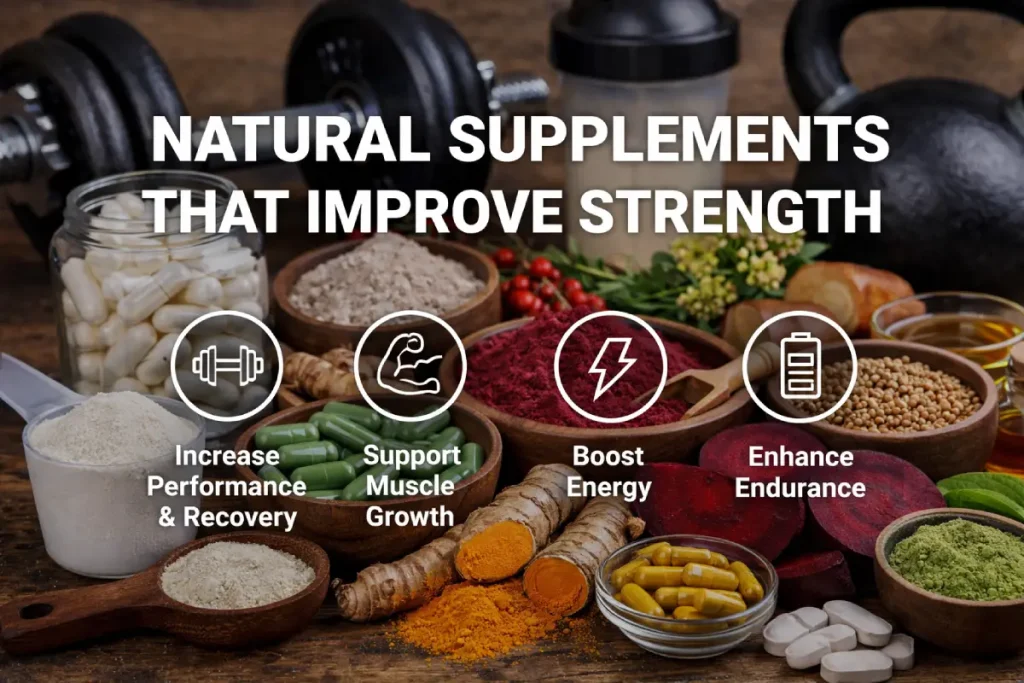
Natural supplements can help increase energy, improve muscle recovery, enhance endurance, and support lean muscle growth. When used correctly, they can make a noticeable difference in strength training results.
Below are some of the most effective natural supplements known to support strength development.
Creatine Monohydrate
Creatine is one of the most researched supplements in sports nutrition and remains one of the most effective for improving strength and power.
Creatine occurs naturally in small amounts in foods like red meat and fish. It helps produce ATP (adenosine triphosphate), which is the main energy source used during short bursts of high-intensity exercise such as weightlifting or sprinting.
Supplementing with creatine increases the amount stored in muscles, allowing them to produce more energy during workouts.
Benefits for Strength
Creatine supplementation offers several advantages for people focused on strength training:
- Increases power output during resistance training
- Improves performance in high-intensity workouts
- Helps muscles recover faster between sets
- Supports lean muscle mass development
Many athletes report noticeable improvements in lifting performance within a few weeks of consistent use.
Recommended Intake
A common approach is:
- 3–5 grams daily
- Consumed after workouts or with meals
Creatine monohydrate is considered the most studied and reliable form.
Ashwagandha
Ashwagandha is a powerful adaptogenic herb used for centuries in traditional Ayurvedic medicine. It helps the body manage stress and improve physical resilience.
In recent years, studies have shown that ashwagandha supplementation may also improve strength and muscle recovery.
Strength Benefits
Ashwagandha works through several mechanisms:
- Reduces cortisol levels (stress hormone)
- Supports testosterone production
- Enhances muscle recovery
- Improves endurance and stamina
Lower stress and improved hormonal balance can lead to better training performance and greater strength gains over time.
How to Use It
Typical dosage ranges between:
- 300–600 mg per day
- Standardized extract such as KSM-66 or Sensoril
Consistency is important, as adaptogens tend to work gradually over several weeks.
Beta-Alanine
Beta-alanine is a naturally occurring amino acid that helps increase levels of carnosine in muscle tissue. Carnosine acts as a buffer against acid buildup during intense exercise.
When muscles accumulate acid during training, fatigue occurs more quickly. Increasing carnosine levels can delay this fatigue, allowing longer or more intense training sessions.
Performance Benefits
Beta-alanine supplementation can help:
- Increase muscular endurance
- Delay muscle fatigue
- Improve high-intensity performance
- Support more training volume
While it does not directly increase strength like creatine, it allows longer and harder workouts, which contributes to strength development over time.
Typical Dosage
Most research suggests:
- 2–5 grams daily
- Split into smaller doses to avoid tingling sensations
The tingling feeling, called paresthesia, is harmless but can feel unusual.
Rhodiola Rosea
Rhodiola Rosea is another adaptogenic herb known for improving energy, mental focus, and physical performance.
Athletes often use Rhodiola to reduce fatigue and improve stamina during demanding workouts.
Strength-Related Benefits
Rhodiola may help strength athletes by:
- Improving exercise endurance
- Reducing physical fatigue
- Enhancing recovery
- Supporting mental focus during workouts
By improving both mental and physical stamina, it helps athletes maintain high-quality training sessions.
Suggested Use
Typical supplementation ranges from:
- 200–400 mg daily
- Standardized extract with 3% rosavins and 1% salidroside
Fenugreek
Fenugreek is an herb commonly used in cooking but also studied for its effects on hormone levels and athletic performance.
Some research suggests fenugreek may help increase free testosterone levels and improve strength outcomes when combined with resistance training.
Strength Benefits
Potential benefits include:
- Increased strength performance
- Improved body composition
- Support for healthy testosterone levels
- Enhanced recovery after workouts
While research is still developing, early studies suggest promising results.
Recommended Dosage
Most supplements provide:
- 500–600 mg per day
Taking fenugreek with meals may help improve absorption.
Beetroot Powder
Beetroot powder is rich in dietary nitrates, which help improve blood flow and oxygen delivery throughout the body.
Better circulation allows muscles to receive more oxygen and nutrients during exercise, improving performance and endurance.
Strength and Performance Benefits
Beetroot supplementation may help:
- Improve muscular endurance
- Increase oxygen efficiency
- Support longer training sessions
- Enhance workout stamina
Although beetroot is often associated with endurance sports, strength athletes can also benefit from improved blood flow.
How to Use It
Common recommendations include:
- 3–6 grams of beetroot powder before workouts
Some athletes prefer beetroot juice for faster absorption.
Protein from Natural Sources
Protein plays a critical role in building strength because it provides the amino acids needed to repair and grow muscle tissue.
Natural protein supplements are often derived from whole food sources such as:
- Whey protein
- Casein protein
- Pea protein
- Brown rice protein
Consuming enough protein daily helps maximize muscle repair after resistance training.
Strength-Building Benefits
Adequate protein intake helps:
- Repair muscle fibers damaged during training
- Increase lean muscle mass
- Support recovery
- Improve strength over time
Recommended Intake
Strength athletes generally aim for:
- 1.6–2.2 grams of protein per kilogram of body weight daily
Protein shakes can make it easier to reach these levels.
Turmeric and Curcumin
Turmeric contains an active compound called curcumin, which has powerful anti-inflammatory properties.
Intense training often causes small amounts of muscle damage and inflammation. Curcumin can help reduce this inflammation and improve recovery.
Recovery Benefits
Curcumin may help:
- Reduce muscle soreness
- Improve recovery speed
- Decrease inflammation after workouts
- Support joint health
Faster recovery allows more consistent training, which ultimately leads to greater strength gains.
Suggested Dosage
Typical intake includes:
- 500–1000 mg curcumin daily
- Often combined with black pepper extract (piperine) for better absorption
Magnesium
Magnesium is an essential mineral involved in hundreds of biochemical processes in the body, including muscle contraction and energy production.
Many people do not consume enough magnesium through diet alone, which can negatively affect performance.
Strength-Related Benefits
Magnesium supports:
- Muscle contraction and relaxation
- Energy production
- Reduced muscle cramps
- Better sleep and recovery
Proper magnesium levels help athletes maintain consistent training performance.
Recommended Intake
Most adults benefit from:
- 300–400 mg per day
Magnesium glycinate or citrate forms are commonly used for better absorption.
The Importance of Combining Supplements with Training
Supplements alone cannot create strength. They are only effective when combined with proper training and nutrition.
To maximize strength gains, focus on the following fundamentals:
Progressive Resistance Training
Strength improves when muscles are challenged with increasing resistance over time. Compound exercises such as squats, deadlifts, bench presses, and pull-ups are especially effective.
Adequate Nutrition
Muscles require sufficient calories, protein, carbohydrates, and healthy fats to grow and recover.
Whole foods should always form the foundation of a strength-building diet.
Recovery and Sleep
Strength improvements occur during recovery, not during workouts. Quality sleep and rest days allow muscles to repair and grow stronger.
Consistency
The biggest factor in strength improvement is long-term consistency. Supplements can support progress, but consistent training habits produce the real results.
Safety Considerations
Even natural supplements should be used responsibly.
Keep these guidelines in mind:
- Follow recommended dosages
- Choose reputable supplement brands
- Consult a healthcare professional if you have medical conditions
- Avoid combining too many supplements at once
Quality and purity are important because poorly manufactured supplements may contain contaminants or inaccurate ingredient amounts.
Final Thoughts
Natural supplements can play a valuable role in improving strength and supporting athletic performance. When used alongside structured training, balanced nutrition, and proper recovery, they can help enhance energy production, reduce fatigue, and improve muscle development.
Some of the most effective options include creatine, ashwagandha, beta-alanine, rhodiola, fenugreek, beetroot powder, protein supplements, curcumin, and magnesium. Each works through different mechanisms, from increasing energy availability to improving recovery and hormone balance.
The key is understanding that supplements are tools, not shortcuts. Real strength gains still come from consistent training, disciplined nutrition, and patience over time.
When used wisely, natural supplements can help support the journey toward greater strength, improved fitness, and better overall physical performance.