

Last Updated on March 31, 2026
The problem with fat loss today is not that people don’t know what to do—it’s that they’ve been fed a version of the truth that keeps them confused, dependent, and constantly restarting. The fitness industry doesn’t usually lie outright. Instead, it strips away context and nuance, then repackages partial truths into something that looks like a complete solution. You’re told that a certain diet, workout, or supplement is the answer, when in reality, it’s just one small piece of a much bigger picture. That’s why people keep jumping from one approach to another, thinking the method is the problem, when the real issue is how the information is framed.
Misconceptions with Fat Loss
One of the biggest misconceptions pushed by the industry is that fat loss comes down to finding the “best” method. Whether it’s keto, intermittent fasting, low-carb, or some new trending protocol, each one is marketed as superior. But in practice, all of these approaches work for the same underlying reason—they help create a calorie deficit. That’s it. The method itself is not magic. What matters is whether you can follow it consistently without burning out. The industry doesn’t emphasize this because “do what you can stick to for months” is not a compelling sales pitch. It’s too simple, too boring, and too honest.
Another common idea is that more effort leads to more fat loss. People are pushed to train harder, longer, and more frequently, as if intensity alone guarantees results. But fat loss doesn’t scale that way. There’s a point where adding more workouts or pushing harder stops being helpful and starts becoming counterproductive. Recovery suffers, hunger increases, and stress builds up. Eventually, people either overeat or burn out completely. The truth is, fat loss responds better to consistency than intensity. A moderate, repeatable routine will outperform an extreme one that you can’t sustain.
Cardio is another area where the message gets distorted. It’s often presented as the main driver of fat loss, leading people to spend hours on treadmills or doing daily high-intensity sessions. While cardio does burn calories, its impact is often overestimated. A single workout might burn a few hundred calories, which can easily be undone by one extra meal or snack. On top of that, too much cardio can increase appetite and even reduce muscle mass if not balanced properly. Strength training and nutrition play a much bigger role than most people realize, but they don’t get the same attention because they’re less flashy.
Supplementation
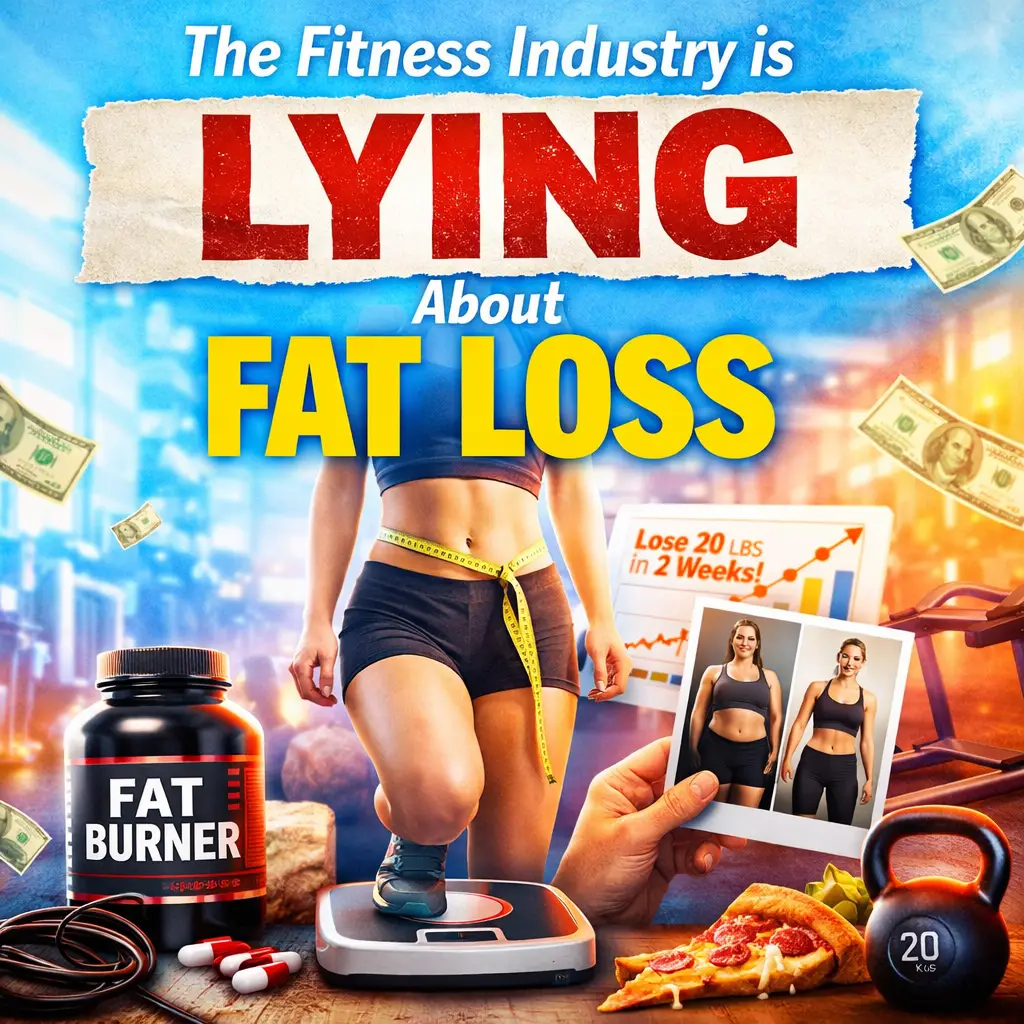
Supplements are where the gap between reality and marketing becomes even more obvious. Fat burners, metabolism boosters, and similar products are sold as shortcuts, but their actual effects are minimal. At best, they provide a slight increase in energy or a small reduction in appetite. They don’t drive fat loss on their own. The fundamentals—calorie control, protein intake, activity, and sleep—are still doing almost all the work. But those don’t come in a bottle, so they’re harder to sell.
The idea of a “broken metabolism” is another narrative that gets pushed heavily. It’s often used to explain stalled progress, making people believe something is wrong with their body. In reality, what’s happening is normal. As you lose weight, your body adapts by burning fewer calories and increasing hunger. This is not damage—it’s a built-in survival mechanism. The industry turns this into a problem that needs fixing, when it’s really something that needs managing. Adjusting intake, increasing activity, or taking a break from dieting are usually enough to move forward.
Spot Reduction
Spot reduction is another persistent myth. People are led to believe that targeting specific areas with certain exercises will burn fat in those spots. This is why you see endless routines focused on abs, thighs, or arms. But fat loss doesn’t work that way. Your body decides where fat comes off, and it rarely aligns with what you want. Exercises can build muscle in those areas, but they don’t directly remove the fat covering them. This misunderstanding keeps people stuck doing ineffective routines, hoping for results that won’t come from that approach alone.
Fast results are heavily promoted because they’re easy to market. Programs promising dramatic changes in a few weeks attract attention, but they come with trade-offs. Rapid fat loss often leads to muscle loss, fatigue, and a higher chance of regaining the weight later. Slower, steady progress is far more sustainable, but it doesn’t have the same appeal. People want quick wins, and the industry is built to provide that expectation, even if it doesn’t hold up long-term.
Discipline is often framed as the main factor separating success from failure. While it does matter, it’s not the whole story. Environment and structure play a bigger role than most people think. If your daily setup makes it easy to overeat or skip workouts, relying on willpower alone won’t work for long. People who succeed tend to build systems that support their goals—preparing meals, setting routines, and reducing friction in their day. This makes consistency easier without needing constant motivation.
Tracking Progress
Another issue is the overreliance on the scale as the main measure of progress. Body weight fluctuates for many reasons beyond fat loss, including water retention, food intake, and hormonal changes. This can create frustration when the scale doesn’t move as expected, even if progress is happening. Looking at other indicators like strength, measurements, and how clothes fit gives a clearer picture, but these don’t provide the instant feedback people are used to.
Perhaps the most overlooked part of fat loss is what happens after you achieve it. The industry focuses heavily on losing weight but rarely on maintaining it. Once the structured plan ends, many people revert to old habits and regain the weight. Maintenance requires a different mindset—one that focuses on sustainability rather than short-term results. Without that shift, even successful fat loss becomes temporary.
Losing Fat is not Complicated
At its core, fat loss is not complicated. It requires a manageable calorie deficit, enough protein to support muscle, regular strength training, and consistent daily movement. Sleep and stress management also play a role, even though they’re often ignored. None of these are groundbreaking or new, which is why they’re easy to overlook. But they are what actually work.
The nuance is that there is no single perfect approach that works for everyone. Different people respond differently based on their lifestyle, preferences, and biology. The best plan is not the most advanced or extreme—it’s the one you can follow consistently without disrupting your life. That’s the part the industry doesn’t emphasize, because it doesn’t create urgency or dependency.
In the end, the issue isn’t that fat loss is impossible or overly complex. It’s that the way it’s presented creates confusion and unrealistic expectations. Once you strip away the noise, the process becomes clearer. Not easy, but clear enough to follow without constantly second-guessing. That clarity is what most people are missing, and it’s what actually leads to long-term progress.