
Last Updated on January 8, 2026
A devastating wave of death swept through the bodybuilding world in 2025.
More than 50 competitive bodybuilders lost their lives—many in their 30s, many without warning, and over half from heart-related causes. The pattern spans continents, federations, and divisions. It is no longer isolated. It is systemic.
This isn’t just about steroids anymore.
It’s about contaminated injections, extreme dehydration protocols, unchecked drug escalation, coach accountability gaps, and a culture that rewards stage-ready perfection at almost any cost.
The numbers are getting worse—and the stories behind them are impossible to ignore.
Two Young Brazilians Gone Within Days
Baldo Marquez Jr. — Age 25
Baldo Marquez Jr. was a rising Brazilian Men’s Physique competitor chasing his IFBB Pro card. Just days after his last competition, he died on December 22, 2025, reportedly from cardiac arrest.
Baldo frequently praised his coach on social media throughout his prep. After his death, those same guiding voices fell silent. No public accountability. No explanation. Just loss.
Kevin Notário Nunes de Oliveira — Age 28
Shortly after Baldo’s death, another Brazilian tragedy followed.
Kevin was rushed to the hospital with severe leg pain. Doctors diagnosed necrotising fasciitis, a flesh-eating bacterial infection. Despite emergency surgery, he did not survive.
His father later confirmed the infection stemmed from misuse of injectable anabolic steroids, likely contaminated or improperly stored. The injections introduced deadly bacteria directly into muscle tissue.
Kevin left behind twin daughters and a grieving family.
His story stands as a brutal warning against black-market shortcuts.
The Russian Hulk: Bigorexia, Synthol, and Regret
Nikita Takachuk — Age 34
Known globally as the “Russian Hulk,” Nikita Takachuk died in May 2025 from multi-organ failure.
Nikita was once a legitimate elite powerlifter:
- 770 lb deadlift
- 795 lb squat
- 465 lb bench
- Russia’s Master of Sports title at 21
But it wasn’t enough.
Driven by bigorexia (muscle dysmorphia), Nikita began injecting synthol in 2015 to artificially inflate muscle size. Contracts reportedly required continued use for promotional purposes.
Long-term synthol abuse caused:
- Muscle fibrosis
- Nerve damage
- Chronic infections
- Pulmonary embolism
- Heart failure
Multiple surgeries followed. His bodybuilding career collapsed.
In 2022, Nikita publicly expressed regret. His arms exceeded 60 cm, yet he lost every chance to compete legitimately. Despite failing health, he pushed toward 300 lbs, never feeling “big enough.”
Autoimmune disease, kidney failure, pulmonary edema, blood clots, and cardiac arrest followed.
He paid the price for chasing size without limits.
Dropping Dead Mid-Competition
Soukir Singh
On December 21, 2025, Soukir Singh collapsed during a powerlifting competition in India. After successfully benching 330 lbs and deadlifting 770 lbs, he complained of severe chest pain and suffered cardiac arrest.
Resuscitation failed.
Wander Santos da Silva Moreira — Age 30
Wander collapsed onstage during a Brazilian competition in front of spectators. Emergency response was immediate—but unsuccessful.
He had struggled with high blood pressure leading into the show. A known red flag ignored in pursuit of a trophy.
He left behind a wife and two children.
Chinese Champions: Clean Bloodwork Didn’t Matter
Wang Kun — Age 30
An eight-time consecutive national champion in China, Wang Kun earned his IFBB Pro card in 2022. At 165 cm and 260 lbs, his size was extreme.
Days before his death, medical checkups showed no abnormalities—just mild flu symptoms.
He died suddenly from cardiac arrest.
Leo Yang — Age 38
A Chinese university professor and competitive bodybuilder, Leo Yang died during training while preparing for the Hong Kong Championships.
Reports revealed daily use of 30 IU of growth hormone—an extreme dose. Combined with intense training and strict dieting, experts believe cardiovascular stress became catastrophic.
Varinder Singh Ghuman — Age 42
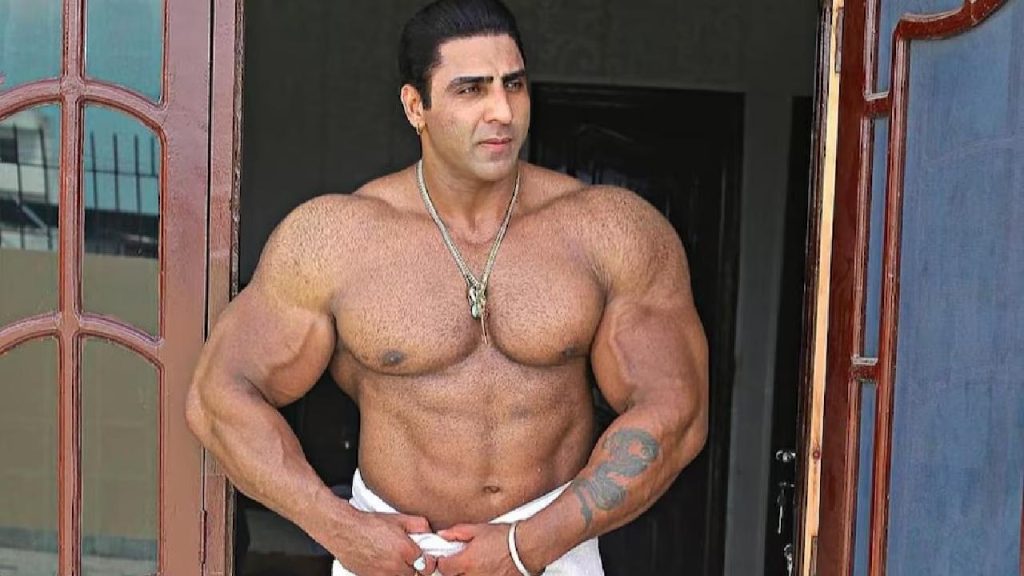
One of India’s most recognizable professional bodybuilders, Ghuman reportedly died from a heart attack in 2025. He was in his early 40s and remained active in fitness and film work.
Jayne Trcka — Age 62
A veteran female bodybuilder and actress, Trcka passed away in 2025 at age 62. While older than many others on these lists, her death reignited debate about long-term health consequences of extreme bodybuilding lifestyles.
Iran’s Bodybuilding Crisis
Multiple Iranian bodybuilders died within months, almost all from cardiac arrest:
- Framarz Eizi (33) – Gold medalist weeks before death
- Hussein Khalib Ratik (early 20s) – Newly married
- Farbod Sudi (23) – Provincial champion
- Farad Kamis Tamasoki – Asian heavyweight champion
- Farzad Kanani (48) – National team veteran
- Nima Kanpur – Died during training
Many Iranians raised concerns not only about steroid abuse, but also about broader patterns of sudden deaths across sports nationally and globally.
The Coach Accountability Problem
When athletes win, coaches celebrate loudly.
When athletes die, many disappear.
Coaches often:
- Design extreme dehydration protocols
- Recommend diuretics and compounds
- Push training during severe caloric deficits
Responsibility does not end with the athlete.
Coaches influence decisions. They shape prep. They apply pressure. Silence after tragedy raises serious ethical questions.
Contaminated Gear and Black-Market Roulette
Marcos Antônio Muray — Age 32
Marcos died after severe illness linked to black-market anabolic steroid use. His wife described terrifying symptoms: breathing difficulty, abnormal urine color, kidney failure.
Investigators found trenbolone and clenbuterol in his apartment.
He believed suffering was “the price to pay” to step onstage.
He left behind a wife and two children.
Black-market steroids mean:
- No quality control
- Bacterial contamination
- Unknown dosages
- Degraded compounds
Kevin’s flesh-eating infection came from this exact scenario.
Professional-Level Mortality Is Far Higher
Studies comparing amateur and professional bodybuilders reveal a stark reality:
Professional bodybuilders die early at roughly 5× the rate of amateurs.
This data predates 2020 and eliminates speculation around recent global events. Higher-level competition means:
- Greater drug volume
- Longer exposure
- More extreme contest prep
Longevity declines sharply.
Youth Doesn’t Protect You
Yair Raspria — Age 22
Three weeks before his pro debut, Yair died from pneumonia. Prep destroyed his immune system through dehydration, caloric restriction, excessive cardio, sleep deprivation, and stacked substances.
Christian Mosca — Age 30
Died from bacterial meningitis during the off-season while weighing 300 lbs and eating 6,000 calories daily.
The DNP Death at the Arnold Classic
Jodi Weitz — Age 20
Jodi died attending the Arnold Classic Expo. She wasn’t competing—she wanted to look impressive for photos and sponsorships.
Her heart stopped due to severe dehydration after using DNP and diuretics.
She had been hospitalized one week earlier—a warning sign ignored.
No 20-year-old should die trying to look good at an expo.
Extreme Bulking Gone Wrong
Dmitry Yuanzin
Died in his sleep after attempting a 10,000-calorie daily binge challenge. Complained of chest pain days earlier.
Jimmy Sadic
Australian bodybuilder known for severe abdominal distension linked to HGH abuse. Died suddenly from heart attack at 42, leaving behind a wife and young child.
Korean Legends and Regret
Yeon Seok Mok — Age 43
A dominant Korean champion whose blood pressure remained in the 200s for years. Kidney failure followed. His final regret wasn’t bodybuilding—it was neglecting family.
Park Kyung-won — Age 34
A popular YouTuber who publicly admitted steroid abuse and exposed systemic drug use in Korean fitness. Died from health complications after battling depression.
When Clean Checkups Mean Nothing
Several athletes died shortly after “normal” medical reports:
- Wang Kun (30)
- Vinod Singh Gooman
- Lorena Blanco (37)
Standard screening cannot predict sudden cardiac events under chronic extreme stress.
The Numbers Don’t Lie
From documented 2025 cases:
- Over 50% died from heart-related causes
- Average age: ~35
- Clean bloodwork offered no protection
- Youth did not matter
- Deaths occurred worldwide
This is not coincidence.
It is consequence.
The Real Cost of Perfection
These were not statistics.
They were fathers, daughters, husbands, sons.
No trophy is worth orphaning children.
No pro card justifies widows.
No Instagram following compensates for dying at 25.
Until accountability extends beyond athletes to coaches, federations, and industry voices, the body count will continue to rise.
They paid with their lives.