
Last Updated on March 3, 2026
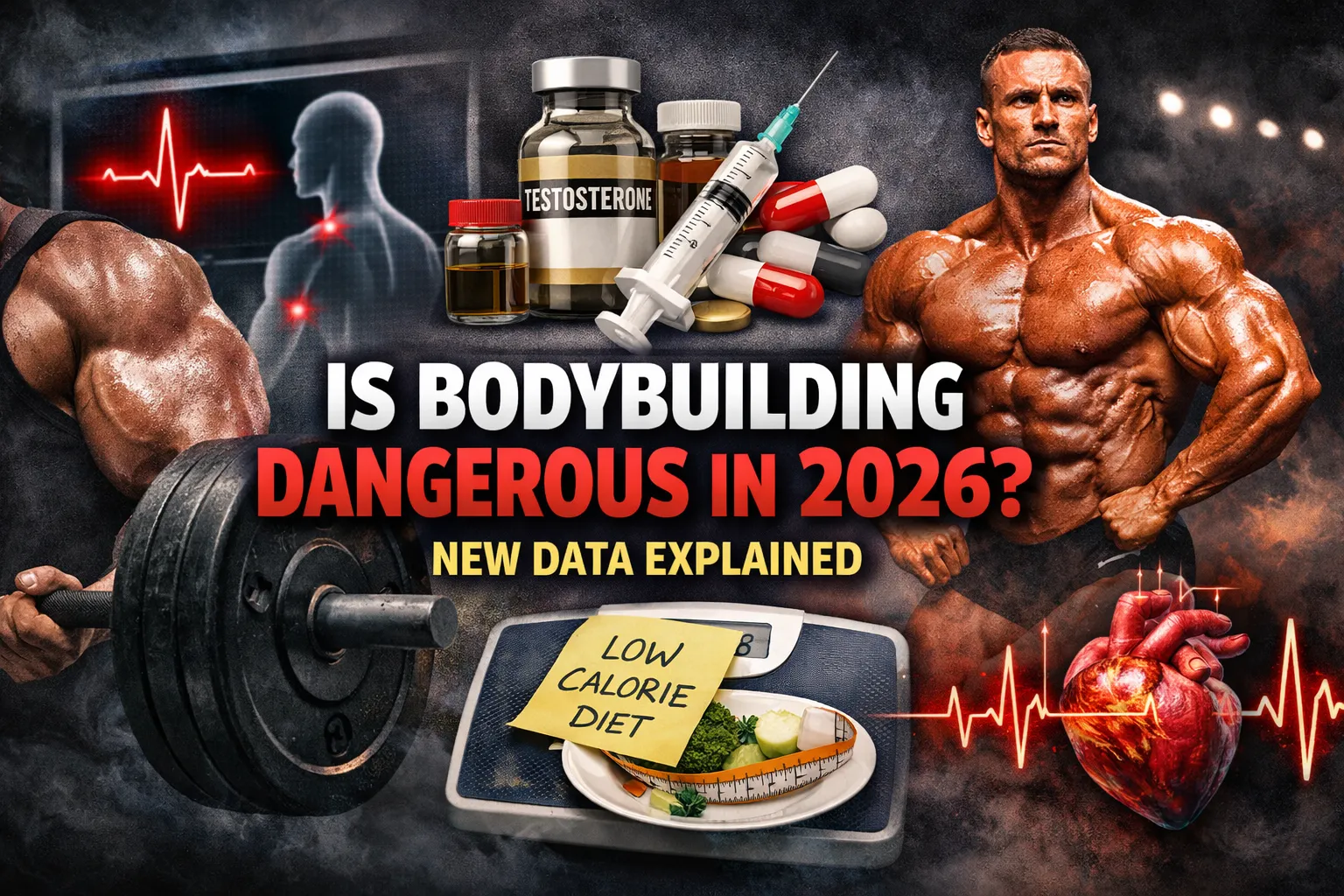
Bodybuilding has always walked a fine line. On one side, it builds discipline, muscle, and confidence. On the other, people worry about injuries, steroids, and long-term health risks. So in 2026, with more research and better training science, is bodybuilding actually dangerous?
Let’s break it down using current data and trends.
The Short Answer
Bodybuilding itself is not inherently dangerous. Poor programming, extreme dieting, drug abuse, and ego lifting are what create most of the risks.
Modern sports science has actually made competitive and recreational bodybuilding safer than it was 10–20 years ago. But the risks still exist, especially at the professional level.
Injury Risk: What the Data Shows
Recent sports medicine reports show that resistance training has one of the lowest injury rates compared to contact sports like football, basketball, or martial arts.
Most bodybuilding injuries in 2026 fall into three categories:
- Shoulder impingement
- Lower back strain
- Tendon overuse (especially elbows and knees)
The cause is rarely the exercise itself. It’s usually:
- Poor form
- Excessive volume
- Lack of recovery
- Ignoring early pain signals
Recreational lifters following structured programs have significantly lower injury rates than those training randomly without progression planning.
Steroids and PEDs: The Real Danger Zone
The biggest health concern in bodybuilding remains anabolic steroid use.
Studies published between 2023 and 2025 continue to show strong links between long-term anabolic steroid abuse and:
- Cardiovascular disease
- Liver stress
- Hormonal disruption
- Increased stroke risk
Competitive bodybuilding at elite levels still carries higher health risks due to performance-enhancing drug (PED) use. However, natural bodybuilding federations are growing rapidly in 2026, offering safer competitive options.
If someone competes naturally and trains responsibly, the long-term health outlook is dramatically different from enhanced competitors.
Dieting and Contest Prep Risks
Extreme cutting phases can stress the body. In contest prep, athletes may experience:
- Hormonal suppression
- Sleep disturbances
- Mood swings
- Temporary metabolic slowdown
Newer prep protocols in 2026 emphasize slower fat loss, refeeds, and structured reverse dieting. This reduces damage compared to old-school crash dieting methods.
For everyday lifters, moderate fat loss and muscle gain phases pose minimal health risk when protein intake and calories are managed correctly.
Mental Health and Body Image
Bodybuilding can improve confidence. But social media has added pressure.
In 2026, more coaches are addressing:
- Body dysmorphia
- Obsession with leanness
- Social comparison
Responsible coaching now includes mental health awareness alongside physical programming.
The Benefits Often Overlooked
When done correctly, bodybuilding improves:
- Bone density
- Insulin sensitivity
- Metabolic health
- Muscle mass (critical for aging adults)
- Joint stability
Resistance training is now strongly recommended by global health organizations for longevity and healthy aging.
For people over 40 or 50, structured weight training may actually reduce overall mortality risk.
So, Is Bodybuilding Dangerous in 2026?
Here’s the clear breakdown:
- Recreational, natural bodybuilding = low risk and high reward
- Competitive enhanced bodybuilding = elevated cardiovascular and hormonal risk
- Poorly programmed training = injury risk
- Intelligent, progressive training = long-term health benefits
The danger is not the iron. It’s how you use it.
Bodybuilding in 2026 is safer than ever when backed by science, proper recovery, and natural training standards. The real risk comes from extremes — extreme drugs, extreme dieting, and extreme ego.
Train smart, eat properly, recover well — and bodybuilding becomes one of the most powerful tools for lifelong health, not a threat to it.