
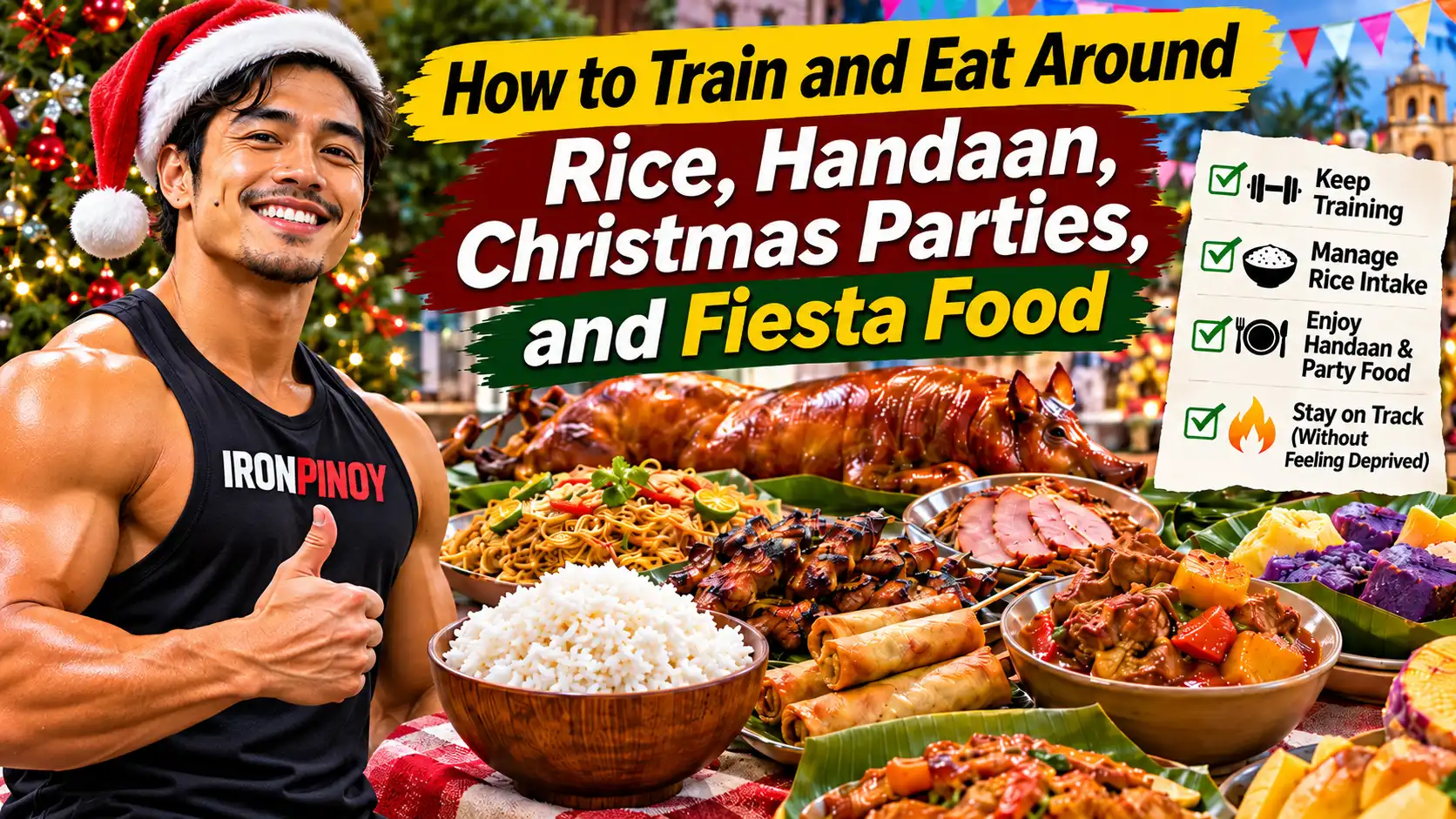
If you are trying to get in shape in the Philippines, you already know the problem. The plan looks perfect on Monday. Then there is a birthday handaan on Tuesday, a Christmas party on Friday, a barangay fiesta on Sunday, and a mountain of rice at every single one.
Most fitness advice was written for people who do not eat this way. It tells you to skip the rice, avoid the lechon, and say no to the leche flan. That is not realistic in a culture where food is how we show love, and it is not necessary either.
This guide is built for how Filipinos actually eat. You will learn why rice is not the enemy, how to build a plate at a handaan, how to set up your training around busy party weeks, and how to get through the Christmas season without losing your progress or your sanity.
Table of Contents
- Why Filipino food culture and fitness can work together
- Rice: friend, not enemy
- How to build a plate at a handaan
- Fiesta food: what to prioritize and what to enjoy
- Christmas parties and Noche Buena strategy
- How to train around party season
- A simple weekly game plan
- Mistakes that quietly undo your progress
- Frequently asked questions
- The bottom line
1. Why Filipino Food Culture and Fitness Can Work Together
The goal is not to avoid food events. The goal is to stay consistent across a whole month, not perfect at one meal.
Progress comes from what you do most of the time. One fiesta lunch does not erase weeks of training. What does cause damage is the all-or-nothing cycle: eating strictly all week, going overboard at the party, feeling guilty, then restricting even harder.
A better mindset is this: protect your routine, enjoy the event, and return to normal at the next meal. Not the next Monday. The next meal.
2. Rice: Friend, Not Enemy
Rice is the foundation of Filipino meals, and it is also useful for anyone who trains.
What rice actually does
- It fuels training. Rice is a carbohydrate-dense food that refills muscle glycogen, which is the fuel your muscles use for lifting and cardio.
- It is easy to digest. That makes it a good pre-workout and post-workout food.
- It is easy to measure. One cup of cooked white rice is roughly 200 calories and around 45 grams of carbohydrates. That makes portions simple to track once you know the baseline.
Rice does not make you fat on its own. Eating more total calories than you burn over time does. Rice just happens to be the food most Filipinos eat the most of, so it gets the blame.
How to eat rice and still make progress
- Decide your portion before you serve. At home, use a measuring cup for a week or two. Your eyes will learn what one cup looks like. At a party, use the size of your closed fist as a rough guide for one cup.
- Put protein first. Build the plate around the ulam, then add rice around it, not the other way around.
- Time your biggest servings around training. If you lift in the evening, your largest rice portion belongs at lunch or dinner near that session.
- Try a mix. Some people like brown rice or half-and-half for fullness and fiber. Others prefer white rice for easy digestion around workouts. Both work. Choose the one you will actually stay consistent with.
- Do not cut rice completely. Extreme carb cutting often leads to strong cravings, low training energy, and eventually a rebound where you eat far more rice than you planned.
Rough rice guide for different goals
- Fat loss: about half a cup to one cup of cooked rice per meal, adjusted to your overall calorie target.
- Maintenance or recomposition: about one cup per meal.
- Muscle gain: one to two cups per meal, especially around training.
These are starting points, not rules. Adjust based on your body weight, activity level, and how your weight and training are trending over two to three weeks.
3. How to Build a Plate at a Handaan
A handaan is not a restaurant. There is no menu and no calorie label. So you need a simple system you can use without a food scale.
The party plate method
Before you pick up a plate, do a quick walk down the buffet or table. Look at everything first. Then build in this order:
- Protein first. Grilled or roasted chicken, inihaw, fish, tinola, sinigang, nilaga, grilled liempo in a reasonable portion, beef dishes, or sliced ham. Aim for a palm-sized portion or two.
- Vegetables next. Chopsuey, pinakbet, laing, ensaladang talong, fresh salad, or the vegetables inside the dishes. Fill about a quarter of the plate if available.
- Rice or noodles. One serving, not both. If there is pancit and rice, choose the one you enjoy more, or take a smaller portion of each.
- One or two favorites. This is your “I am here to enjoy this” slot. Take the lechon skin, the kare-kare, or the leche flan. Eat it slowly and properly.
Smart swaps that do not feel like sacrifice
- Choose sinigang or tinola as your soup. Broth-based dishes tend to be more filling for fewer calories.
- Choose grilled or roasted over deep-fried when both are available.
- Take one lumpia, not five. Lumpiang shanghai is small and easy to overeat without noticing.
- Go easy on sauces that are mostly oil or sugar, such as sweet spaghetti sauce, creamy sauces, and heavy gravies.
- Use water or unsweetened drinks for most of the event so your calories come from food you actually want, not from soft drinks.
The “wait ten minutes” rule
After your first plate, pause for ten minutes. Talk, hold a drink, play with your nephew. If you are still hungry, go back for a second smaller plate. Satiety takes a little time to register, and this single habit prevents a lot of mindless seconds.
Do not arrive starving
Skipping meals all day to “save calories” almost always backfires. You arrive extremely hungry, eat quickly, and lose track of portions. Instead, eat a normal, protein-rich meal earlier in the day. Something like eggs and rice, or chicken and vegetables, keeps your appetite steady.
4. Fiesta Food: What to Prioritize and What to Enjoy
Fiestas are different from regular handaan. The table is longer, the dishes are richer, and people will keep pushing food onto your plate. Here is how to approach the usual lineup.
Foods that work in your favor
- Inihaw na manok or baboy (grilled chicken or pork): good protein, moderate fat.
- Pinakbet, chopsuey, laing: vegetables, fiber, and volume.
- Sinigang, tinola, nilaga: warm, filling, and relatively lighter.
- Kinilaw, grilled fish, and other seafood: high in protein and often lower in calories.
- Fresh fruit and salads: these are often forgotten at fiestas, but they help balance the meal.
Foods to enjoy in a deliberate portion
- Lechon: Rich and delicious. The meat is a good protein source, and the skin is the most calorie-dense part. Take a few pieces of meat and a small amount of skin, and savor them instead of piling a mountain.
- Kare-kare, menudo, afritada, caldereta: These are stews with oil, sauce, and often peanut sauce or potatoes. Take one serving and pair it with a smaller rice portion since the sauce is already calorie-dense.
- Pancit: Great for sharing and good luck, but easy to overeat. Treat it as your carbohydrate along with or instead of part of your rice.
- Lumpia, chicharon, crispy pata: Fried and very easy to snack on. Decide how many pieces you want before you start.
- Desserts such as leche flan, buko pandan, halo-halo, biko, suman, and kakanin: Pick one or two you truly love. Skip the ones you only want because they are in front of you.
Handling the “kain pa!” pressure
In Filipino culture, refusing food can feel rude. You do not need to be rude or explain your training plan to everyone. Try polite lines such as:
- “Busog pa po ako, pero babalikan ko mamaya.” (I am still full, but I will come back later.)
- “Ang sarap po! Konti lang muna, para makatikim pa ako ng iba.” (It is delicious! Just a little for now so I can try the others.)
- Take a small portion and say thank you. A smaller serving still shows appreciation.
You can also take leftovers home, which spreads the enjoyment across a couple of meals instead of one sitting.
5. Christmas Parties and Noche Buena Strategy
The Philippine Christmas season is long. Parties start in September for many people and continue through January. That means the real risk is not one big meal. It is weeks of small extras that add up.
Zoom out: think in weeks, not days
Your weight and progress respond to your average intake across the week. If you have a big party on Saturday, you can keep Sunday through Friday fairly normal and still stay on track. A single high-calorie day rarely changes your body fat in a lasting way. A habit of eating like it is a party every day, for six weeks, absolutely can.
Noche Buena game plan
Noche Buena is the biggest meal of the season, so plan it intentionally:
- Train earlier on Christmas Eve if your schedule allows. A solid full-body session or a long walk puts you in a good rhythm.
- Eat normally during the day. A protein-rich breakfast and a light, balanced lunch keep you from arriving ravenous at midnight.
- Prioritize the dishes you only see once a year. Hamon, queso de bola, special family recipes, and homemade desserts are worth it. The regular food you can eat any time, such as plain fried snacks or soft drinks, is easier to skip.
- Hydrate. Drink water before and during the meal.
- Stop when comfortably satisfied, not painfully full. You will feel better during the family time and sleep better afterward.
The Christmas party survival checklist
- Eat a protein-rich snack or meal before you go.
- Look at the full table before you serve yourself.
- Choose one dessert you really want instead of tasting everything.
- Alternate alcoholic drinks with water. Alcohol adds calories quickly and lowers your restraint around food.
- Walk or move after the meal. A 15 to 20 minute stroll supports digestion and keeps you active.
Exchange gifts and leftovers wisely
Holidays come with boxes of cookies, fruit cakes, ham baskets, and chocolates. Place them out of sight, share them with neighbors, or set a daily limit. Food that is visible is food that gets eaten.
6. How to Train Around Party Season
The busiest months are often the hardest for gym consistency. Parties, family visits, travel, and work year-end rush all compete for your time. The answer is not to train harder. It is to train smarter and more flexibly.
Keep a minimum effective routine
When life gets busy, switch to a shorter version of your program:
- Two to three strength sessions per week, 30 to 45 minutes each
- Full-body workouts built around squats or leg press, a pushing movement, a pulling movement, and a hinge such as Romanian deadlifts
- Daily walking with a goal such as 7,000 to 10,000 steps
This is enough to maintain muscle and strength through the holidays. Many people even make progress on this simple approach.
Lift before big meals when possible
Training earlier in the day, or before a party, can make it easier to eat mindfully and put the food to good use. Resistance training helps your muscles take up carbohydrates for fuel and recovery. It is not about burning off the food. It is about supporting your body so the meal does its job.
Do not use exercise as punishment
This is important. Avoid thinking “I ate lechon, so I must do two hours of cardio tomorrow.” That mindset leads to burnout and an unhealthy relationship with food. Training should support your goals and your health, not act as a penalty for enjoying a family celebration. If you feel stress or guilt around food that keeps getting worse, consider talking with a registered nutritionist-dietitian or a mental health professional.
Easy movement ideas for the holidays
- A family walk after the meal
- Short bodyweight circuits at home: squats, push-ups, rows with a backpack or band, planks
- Stair climbing or brisk walking at the mall while doing errands
- Dancing at the party. It counts.
- A 20-minute workout on days you cannot reach the gym
Protect protein and sleep
Party season often cuts into sleep and protein intake at the same time. Try to:
- Aim for roughly 1.6 to 2.2 grams of protein per kilogram of body weight per day if you lift and want to build or keep muscle. Check with a professional if you have a medical condition.
- Spread your protein across meals, for example eggs at breakfast, chicken or fish at lunch, and meat or tofu at dinner.
- Keep seven to nine hours of sleep as a target when possible. Poor sleep increases hunger and reduces training quality.
7. A Simple Weekly Game Plan
Here is an example week for someone who has a party on Saturday. Adjust it to your schedule.
- Monday: Strength training, full body. Normal meals with protein at every meal.
- Tuesday: Walk 8,000 to 10,000 steps. Normal meals.
- Wednesday: Strength training. Normal meals.
- Thursday: Rest or light activity. Prepare healthy snacks for the weekend.
- Friday: Short strength session or a long walk. Eat a protein-rich dinner and sleep well.
- Saturday (party day): Light morning workout if you like. Eat a normal protein-rich breakfast and a regular lunch. Enjoy the party using the plate method.
- Sunday: Walk with family, return to your normal meals, and prepare for the next week. No “making up for it” required.
8. Mistakes That Quietly Undo Your Progress
- Skipping meals before the event. It usually leads to overeating and poorer choices.
- Cutting all rice. This can reduce training performance and trigger rebound eating.
- Drinking your calories. Soft drinks, sweetened juice, milk tea, and alcohol add up fast and do little for fullness.
- Treating the whole season as a “cheat period.” A day is a celebration. A season of celebrations is a different pattern.
- Going back to extreme dieting in January. Crash plans rarely last. Gentle, consistent habits do.
- Not tracking anything at all. You do not need to log every meal, but checking your weight trend weekly, taking progress photos, or noting your training results helps you spot drift early.
- Ignoring how you feel. Energy, mood, sleep, and strength are all useful feedback along with the scale.
9. Frequently Asked Questions
Can I eat rice every day and still lose fat?
Yes. Fat loss depends on your overall calorie intake and consistency. Rice can fit as long as your portions match your goals. Many people lose weight while keeping rice in their diet.
Is brown rice better than white rice?
Brown rice has more fiber and micronutrients and may keep you fuller. White rice is easier to digest and convenient around workouts. Both can work in a healthy diet. Pick what you enjoy and can stick with.
How do I eat lechon without ruining my diet?
Take a portion of the meat as your protein, limit the skin and fatty parts to a few pieces, and balance the rest of your plate with vegetables and a moderate amount of rice. Then continue with normal meals afterward.
Will one big Noche Buena meal make me gain fat?
One large meal can raise the number on the scale for a day or two because of extra water, salt, and food volume in your system. That is not the same as gaining fat. Return to your regular routine and the scale usually settles.
How many times a week should I train during the holidays?
Two to three strength sessions plus daily walking is enough for most people to maintain their progress. If you can do more, great. If not, do not skip the minimum.
Should I fast the day before a party?
It is better not to. Fasting often leads to overeating later, and it is not necessary for managing a single event. Eat normally, stay hydrated, and enjoy the meal with a plan.
What if I already overate?
Nothing is ruined. Drink water, take a walk if you feel like it, and eat your next meal normally. Do not punish yourself with extreme restriction or extra-long workouts.
What should I do if I am cutting or preparing for a competition?
If you have a strict target, such as a bodybuilding show or photoshoot, plan your event meals ahead of time, work with your coach or nutritionist, and choose which gatherings are worth adjusting for. For most people not in contest prep, a flexible approach is healthier and easier to sustain.
10. The Bottom Line
Filipino food is meant to be shared, and your fitness plan should be able to share the table. You do not have to give up rice, lechon, or leche flan to build a strong, healthy body.
Here are the main points to remember:
- Rice is a useful fuel. Measure it, time it around training, and do not fear it.
- At a handaan, protein first, vegetables next, one rice or noodle serving, and one or two favorites.
- At fiestas and Christmas parties, plan ahead, look before you serve, and enjoy the foods that matter most to you.
- Keep training flexible. Two to three strength sessions and daily walking are enough to hold your ground.
- Never use exercise as punishment or skip meals to “earn” the party.
- Return to your routine at the next meal, not next Monday.
Consistency across the whole season beats perfection at any single meal. Enjoy the food, enjoy the people, and keep showing up for your training.
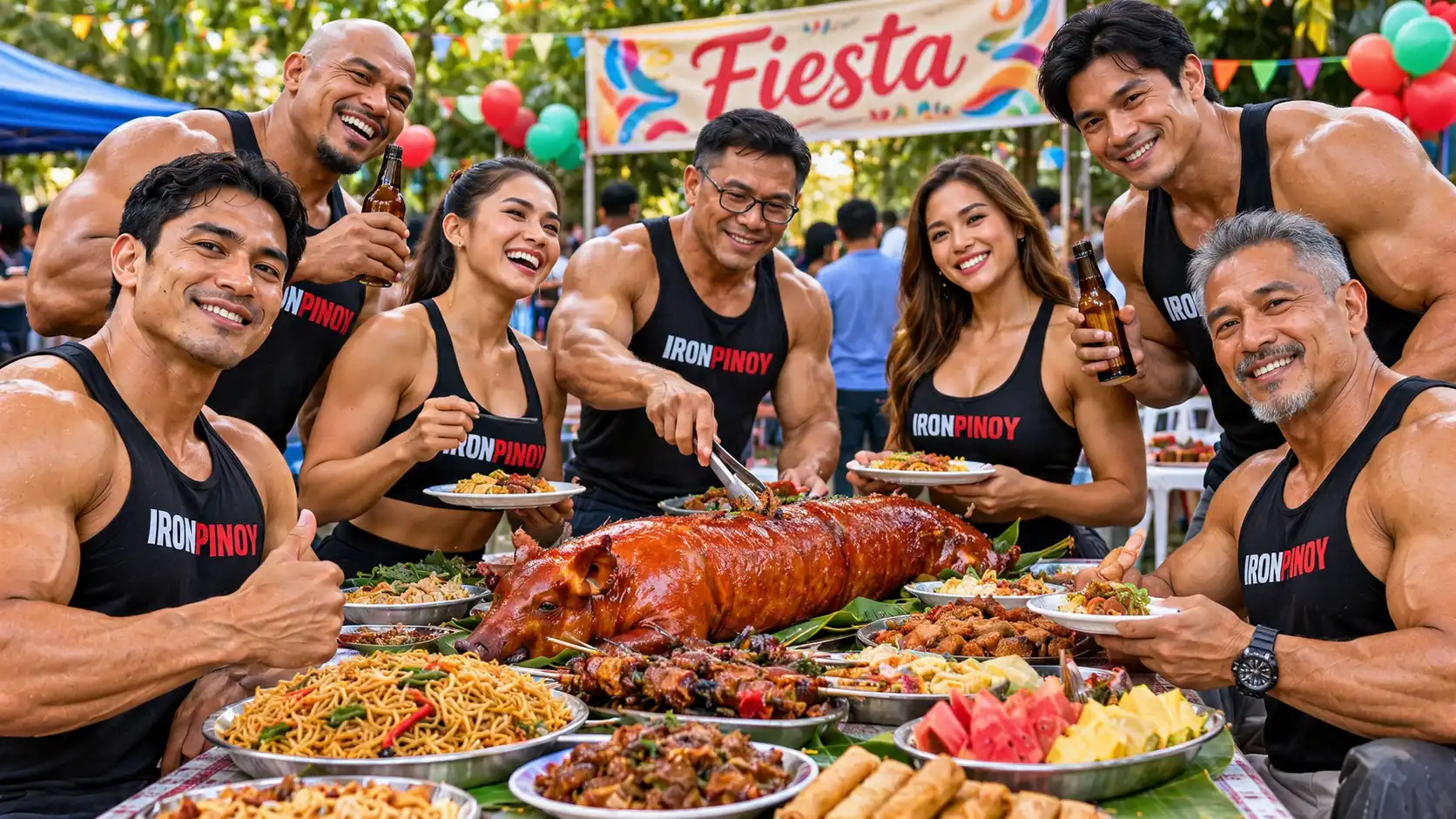
This article is for general education and is not a substitute for personalized medical or nutrition advice. If you have a medical condition, are pregnant, or have a history of disordered eating, consult a licensed doctor or registered nutritionist-dietitian before changing your diet or training plan.