
Last Updated on November 26, 2026
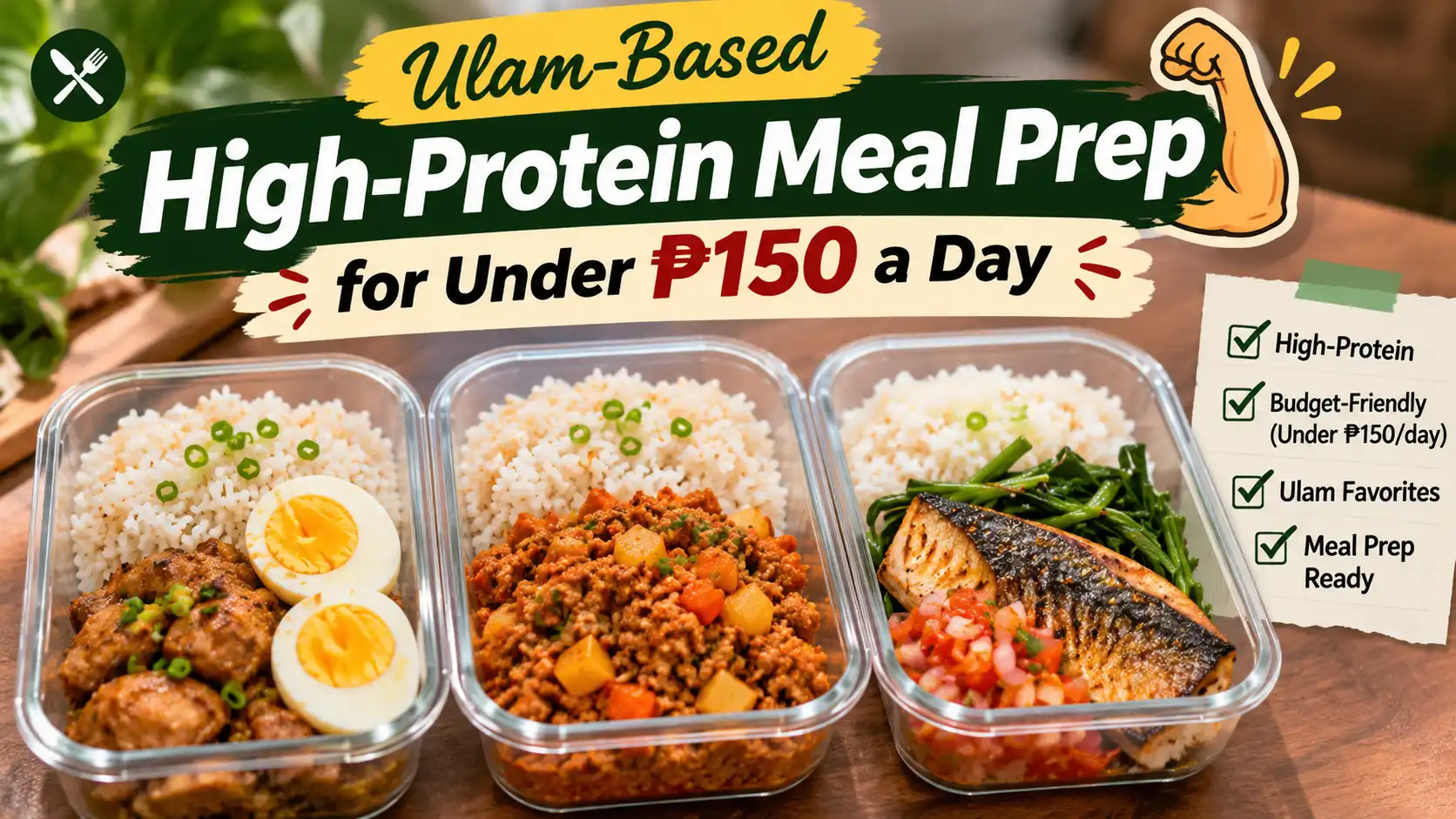
You don’t need imported whey, pricey chicken breast packs from the supermarket, or a fancy meal prep subscription to eat high-protein in the Philippines. The ulam (aka viands) you grew up with, think adobo, ginisang monggo, tokwa, sardinas, and tinola, already does most of the work. With some smart palengke shopping and one prep session a week, you can land around 80 to 100 grams of protein a day for roughly ₱150 or less.
This guide shows you how: a sample daily menu with costs, the cheapest protein sources, a weekly prep plan, and tips to keep the budget tight.
Note on prices: All prices below are rough estimates based on typical wet market and supermarket prices in Metro Manila. They change by season, location, and vendor, so check your local palengke and adjust.
Why Ulam Is Perfect for High-Protein Meal Prep
Filipino ulam is built for batch cooking. Many classic dishes taste better the next day, reheat well, and stretch a small amount of meat or fish with sauce, vegetables, and legumes. Add rice as your budget carb, and you have a complete, affordable meal.
A few reasons it works:
- Braised and stewed dishes keep well. Adobo, nilaga, tinola, and ginisang monggo hold up in the fridge for days.
- Cheap protein is already part of the menu. Itlog, tokwa, monggo, sardinas, tilapia, and chicken atay are everyday ingredients.
- Seasonings are low-cost. Toyo, suka, bawang, sibuyas, and paminta add big flavor for pennies.
The Cheapest Protein Sources at the Palengke
Here are the best protein-per-peso options for Filipino cooking. Approximate protein is per typical serving.
| Ingredient | Approx. protein | Why it’s a budget win |
|---|---|---|
| Itlog (egg), 1 pc | ~6 g | Cheap, versatile, no prep skill needed |
| Tokwa (firm tofu), 1 block ~100 g | ~8–10 g | Absorbs flavor, great in adobo and sisig-style dishes |
| Monggo (mung beans), 60 g dry | ~14 g | Very low cost, filling, rich in fiber |
| Canned sardines, 1 small can | ~12–15 g | Ready to eat, great with sautéed vegetables |
| Chicken atay (liver), 100 g | ~17–20 g | One of the cheapest animal proteins, also iron-rich |
| Chicken breast or leg quarter, 150 g raw | ~28–35 g | Best bulk option when bought by the kilo |
| Tilapia or galunggong, 1 medium fish | ~20–25 g | Fresh fish often costs less than boneless cuts |
| Peanuts or mani, small handful | ~5–7 g | Cheap snack with extra protein |
Tip: buying whole chicken parts and bone-in cuts by the kilo is almost always cheaper per gram of protein than packaged, boneless breast.
Sample Day: Around ₱140 and 80+ Grams of Protein
This is an example of how one day can look. Swap dishes freely using the weekly plan below.
| Meal | What you eat | Est. cost | Est. protein |
|---|---|---|---|
| Breakfast | 2 itlog + 1 cup garlic rice | ₱31 | ~14 g |
| Lunch | Chicken adobo (about 150 g raw chicken) + 1 cup rice + kangkong | ₱55 | ~38 g |
| Dinner | Ginisang monggo with tokwa and malunggay + 1 cup rice | ₱42 | ~25 g |
| Snack | 1 boiled egg or small handful of mani | ₱10 | ~6 g |
| Total | ~₱138 | ~83 g |
That leaves you a small cushion for cooking oil, gas, and price swings, all while staying under ₱150.
Weekly Menu Ideas (Rotate to Avoid Burnout)
Pick two or three ulam each prep session and rotate them. Here are budget-friendly, high-protein options:
- Chicken adobo with extra sauce for rice. Use leg quarters or breast, depending on the week’s price.
- Ginisang monggo with tokwa or chicharon bits. Add malunggay or ampalaya for vegetables.
- Tinolang tilapia or manok. Light, comforting, and easy to portion.
- Tokwa’t baboy-style, but tokwa-heavy. Use mostly tofu with a small amount of meat or none at all.
- Ginisang sardinas with itlog. Fast, cheap, and good for tight weeks.
- Adobong atay at balun-balunan. Budget protein and iron, best cooked well and eaten within a few days.
- Pritong tilapia with ensaladang kamatis. Fry or air-fry in batches for easy reheating.
- Nilagang itlog and gulay on rice. Zero-fuss backup when you’re out of time.
Sample Weekly Grocery List
This is a rough list for one person for a week, aimed at around ₱950 to ₱1,050 total. Adjust for your area.
- Eggs: 1 tray (30 pcs) or 2 dozen
- Chicken leg quarters or breast: about 1 kg
- Chicken liver: 250 to 300 g
- Tilapia or galunggong: 3 to 4 medium fish
- Monggo: 250 g
- Tokwa: 4 to 5 blocks
- Canned sardines: 2 to 3 cans
- Rice: about 2 kg
- Vegetables: kangkong, malunggay, ampalaya, kamatis, sibuyas, bawang (buy what’s cheapest that week)
- Pantry basics: toyo, suka, cooking oil, salt, pepper, bay leaf
The 2-Hour Sunday Prep Plan
You don’t need to cook every meal from scratch every day. Try this routine:
- Cook a big pot of rice and portion into containers, or cook fresh daily if you prefer.
- Make one chicken dish (like adobo) in a large batch.
- Boil monggo and sauté with garlic, onion, and tomato. Add tokwa at the end so it doesn’t crumble.
- Hard-boil 6 to 10 eggs for breakfasts and snacks.
- Fry or bake a few pieces of fish if you plan to eat it in the first two days.
- Wash and chop vegetables so weekday cooking takes minutes.
Portion into containers by meal so you can grab and go.
Food Safety and Storage Basics
Meal prep saves money only if you don’t waste food or get sick.
- Cool cooked food quickly, then refrigerate within about two hours.
- Most cooked ulam keep well in the fridge for about three to four days.
- Freeze portions for days five to seven, especially fish and chicken dishes.
- Reheat until steaming hot.
- When in doubt, throw it out.
If your fridge is small or power interruptions are common, prep twice a week in smaller batches instead of once.
Money-Saving Tips for Pinoy Meal Preppers
- Shop at the palengke, ideally early, when selection is best and vendors may offer better prices for bulk.
- Buy what’s in season. Vegetables like kangkong, talong, and kalabasa are often cheapest when plentiful.
- Choose bone-in, skin-on chicken and use the bones for a quick sabaw.
- Use the whole egg tray. Eggs are your most flexible, cheapest protein.
- Cook with sauce-heavy dishes so a smaller amount of meat feels satisfying with rice.
- Use sardinas as backup, not the main plan, if you’re watching sodium.
- Track your actual receipts for two weeks. Real numbers beat estimates and help you fine-tune.
Is Under ₱150 a Day Realistic?
For many people, yes, especially if you cook at home, buy at wet markets, and lean on eggs, tokwa, monggo, and bone-in chicken. It may be harder in high-cost areas, during price spikes, or if you want a lot of beef or large amounts of fresh seafood. If your target is closer to 120 grams of protein or more, you may need to adjust either the budget or the mix (more eggs, liver, and legumes help).
Beans, Monggo, and Uric Acid: What to Know Before You Meal Prep
Beans and other legumes contain purines, which your body breaks down into uric acid, so people with high uric acid or gout should watch their portions. Since this plan leans on monggo and tokwa, here is how to handle that sensibly.
What the evidence generally says. Legumes like monggo, beans, and lentils have a moderate purine content. Large studies on gout risk have found that purine-rich plant foods, including beans and vegetables, are not linked to gout attacks the way red meat, organ meats, seafood, beer, and sugary drinks are. Even so, a person who already has high uric acid or gout may react differently, and advice varies from person to person.
Other items in this plan that are higher in purines:
- Chicken atay (liver) and other organ meats
- Canned sardines and other small oily fish
- Large portions of any meat in one sitting
If you have high uric acid, gout, or a family history of it:
- Talk to your doctor or a registered dietitian first. They can tell you what suits your lab results and medications.
- Rotate your protein. Lean on itlog, tokwa, and moderate chicken breast portions, and keep liver and sardines occasional.
- Keep monggo portions modest. About 60 g dry per serving, as in the sample menu, rather than a large bowl every day.
- Drink plenty of water throughout the day.
- Skip beer and sugary drinks, which are more strongly tied to flare-ups than beans are.
- Pay attention to your own triggers. If a certain ulam is followed by joint pain, note it and bring it up with your doctor.
If your uric acid is normal, monggo and tokwa are generally fine and remain some of the cheapest, most useful protein sources in a Filipino budget meal plan.
This section is general information, not medical advice.
Frequently Asked Questions
How much protein do I need per day? It depends on your weight, activity level, and goals. A common guideline for active adults is around 1.2 to 2.0 grams per kilogram of body weight. If you have a medical condition, check with a doctor or registered dietitian.
Can I do this if I’m vegetarian? Yes, to a degree. Monggo, tokwa, itlog (if you eat eggs), mani, and other legumes can carry much of the load. Pairing rice and legumes also gives a more complete amino acid profile.
Is canned sardines every day okay? It’s convenient and affordable, but canned fish can be high in sodium. Rotate with fresh fish, eggs, and legumes.
How do I stop getting bored? Change the sauce and the vegetable, not just the protein. Adobo, tinola, and ginisa each feel different even with the same base ingredients.
Final Thoughts
High-protein eating doesn’t have to be expensive or complicated. The humble ulam on your family’s table is already a solid foundation. With a short prep session, a smart palengke list, and a rotation of simple dishes, you can eat well, hit your protein targets, and keep your daily food spend under ₱150.
Start with one week. Track your costs, note what you actually finish, and tweak from there.
Disclaimer: This article is for general information only and is not medical or nutritional advice. Prices are estimates and vary by location and season.