
Last Updated on November 25, 2026
Have you ever wondered why certain exercises build muscle more effectively than others? Why some athletes perform better despite having similar physical characteristics? Or why proper exercise technique can help reduce the risk of injury?
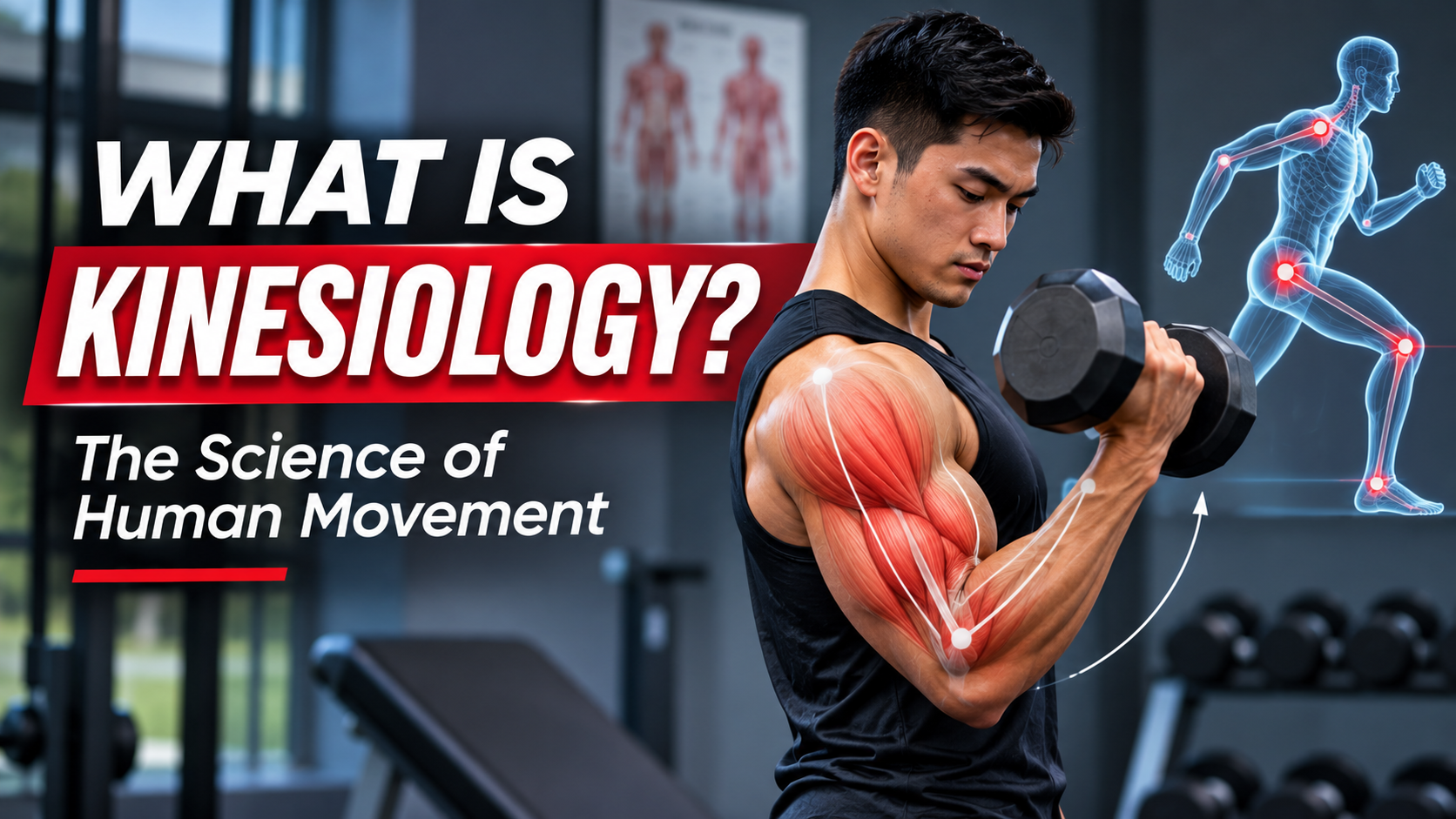
The answers often lie in kinesiology — the scientific study of human movement.
Kinesiology combines anatomy, biomechanics, physiology, neuroscience, and exercise science to understand how the human body moves, adapts, and responds to physical activity.
Whether you are a competitive bodybuilder, personal trainer, recreational athlete, or someone looking to stay physically active as you age, understanding kinesiology can help you train more effectively and make better decisions about your physical health.
What Is Kinesiology?
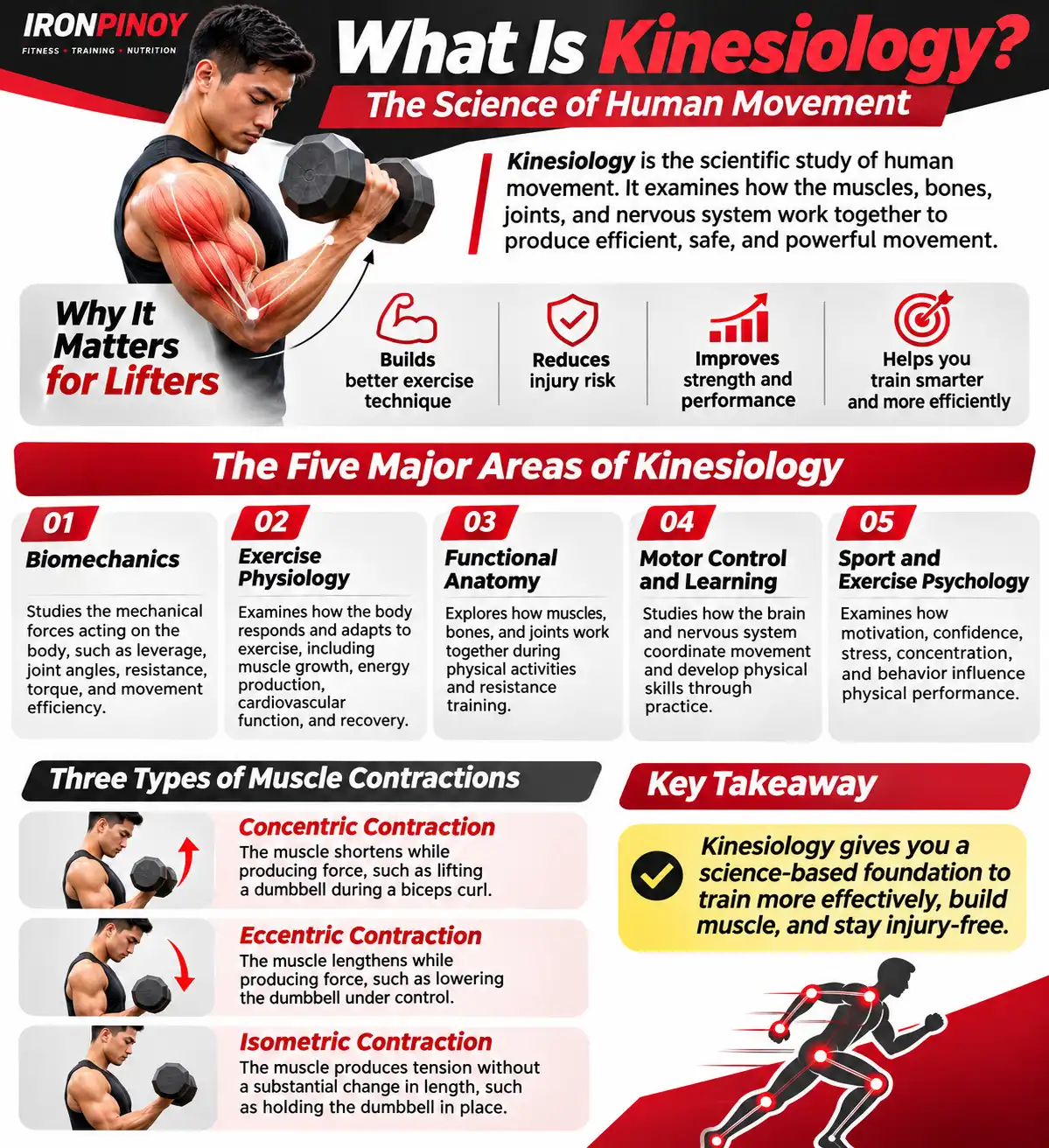
Kinesiology is the scientific study of human movement, physical activity, and physical performance. The term comes from the Greek words kinesis, meaning movement, and logos, meaning study.
It examines how muscles, bones, joints, tendons, ligaments, and the nervous system work together to produce movement.
The American Kinesiology Association promotes kinesiology as a unified field of study and advances its scientific and professional applications.
Today, kinesiology is applied in several areas, including bodybuilding, sports conditioning, physical rehabilitation, exercise programming, ergonomics, injury prevention, and healthy aging.
The Five Major Areas of Kinesiology
Biomechanics
Studies the mechanical forces acting on the human body, including leverage, joint angles, resistance, torque, and movement efficiency.
Exercise Physiology
Examines how the body responds and adapts to exercise, including muscle growth, energy production, cardiovascular function, and recovery.
Functional Anatomy
Explores how muscles, bones, and joints work together during physical activities and resistance training.
Motor Control and Motor Learning
Studies how the brain and nervous system coordinate movement and develop physical skills through practice.
Sport and Exercise Psychology
Examines how motivation, confidence, stress, concentration, and behavior influence physical performance.
How Kinesiology Works
Every physical movement involves a coordinated interaction between the nervous system and the musculoskeletal system.
When you perform a biceps curl, for example, your brain sends signals through motor neurons, activating muscle fibers and producing the force necessary to move the weight.
How the body produces movement
Simplified illustration of voluntary movement and neurological feedback. This diagram illustrates the process of voluntary movement, from the brain sending signals to the muscles producing force, including sensory feedback.
How the Body Produces Movement
From neurological signals to coordinated muscular movement.
Brain
Initiates voluntary movement.
Spinal Cord and Motor Neurons
Transmit electrical signals to muscles.
Muscle Activation
Muscle fibers generate tension.
Joint Movement
Force is transferred through tendons.
Physical Movement
Coordinated execution of exercise.
Sensory feedback helps the nervous system continuously adjust movement, balance and force.
Educational illustration by IronPinoy.com
Kinesiology helps researchers and fitness professionals understand this process and identify ways to improve movement quality, muscular coordination, and physical performance.
The Role of Kinesiology in Bodybuilding
Bodybuilding is more than lifting heavy weights. It involves applying resistance to specific muscle groups to stimulate muscular adaptation and growth.
Understanding kinesiology allows bodybuilders to make more informed decisions about exercise selection, resistance, training volume, and technique.
1. Improving Muscle Activation
Different exercises place different demands on muscles.
For example, changing the angle of a bench press can alter the relative contribution of the pectoral muscles, anterior deltoids, and triceps.
Flat bench press
Trains the pectoralis major, anterior deltoids, and triceps.
Incline bench press
Places greater relative emphasis on the clavicular portion of the chest.
Lateral raise
Places emphasis on the lateral deltoids.
Seated cable row
Trains the back muscles, posterior deltoids, and elbow flexors.
By understanding how these movements work, bodybuilders can develop more targeted training programs.
However, greater muscle activation during a single exercise does not automatically mean greater long-term muscle growth.
2. Understanding Muscle Contractions
Kinesiology identifies three primary types of muscle contractions.

Concentric contraction
The muscle shortens while producing force, such as lifting a dumbbell during a biceps curl.

Eccentric contraction
The muscle lengthens while producing force, such as lowering the dumbbell under control.

Isometric contraction
The muscle produces tension without a substantial change in overall length, such as holding a plank.
All three types of contractions can contribute to strength development and muscular conditioning.
3. Optimizing Mechanical Tension
Mechanical tension is a major stimulus for muscle hypertrophy.
Kinesiology helps explain how external resistance, joint position, muscle length, and leverage influence the tension experienced by muscles during exercise.
This is one reason why two exercises using the same amount of weight can feel completely different.
Interactive Exercise Torque Calculator
Torque describes the turning effect of a force around a joint. This simplified calculator demonstrates how resistance and moment arm length influence external joint torque.
Interactive Joint Torque Calculator
Explore how resistance, lever length and force angle affect external joint torque.
F = Force in newtons
r = Lever length in metres
θ = Angle between force and lever
147.15 × 0.35 × sin(90°) = 51.50 Nm
For a fixed force and lever length, external torque is greatest at 90 degrees.
This simplified educational calculator assumes a static load under gravity. It excludes limb weight, acceleration, internal muscle moment arms and individual anatomical differences. It does not calculate actual muscle force or determine safe training loads.
Developed for IronPinoy.com
This educational model excludes limb weight, acceleration, internal muscle moment arms, and other biomechanical factors.Reset calculator
As the perpendicular moment arm increases, the external torque increases even when the weight remains unchanged.
This principle helps explain why exercise positioning and equipment design matter in resistance training.
4. Improving Exercise Selection
A good bodybuilding program considers the functions of each muscle group rather than simply choosing popular exercises.
| Muscle group | Primary movement | Example exercise |
|---|---|---|
| Chest | Shoulder horizontal adduction | Bench press |
| Lateral deltoids | Shoulder abduction | Lateral raise |
| Latissimus dorsi | Shoulder adduction and extension | Lat pulldown |
| Biceps | Elbow flexion and forearm supination | Dumbbell curl |
| Triceps | Elbow extension | Cable pushdown |
| Quadriceps | Knee extension | Leg extension |
| Hamstrings | Knee flexion and hip extension | Leg curl, Romanian deadlift |
| Glutes | Hip extension | Hip thrust |
| Calves | Ankle plantarflexion | Standing calf raise |
| Abdominals | Trunk flexion and stabilization | Cable crunch, plank |
Understanding these movements can help bodybuilders develop a balanced physique and address underdeveloped muscle groups.
Kinesiology and the Principles of Human Movement
The human body moves through three primary anatomical planes.
The Three Anatomical Planes of Movement
Human movement is commonly described using three anatomical planes. Understanding these planes helps explain how muscles and joints function during resistance training.
Sagittal Plane
Divides the body into left and right portions. Most forward and backward movements occur in this plane.
Flexion and extension.
Exercise Examples
- Barbell squats
- Deadlifts
- Biceps curls
- Leg extensions
- Forward lunges
- Leg curls
Frontal Plane
Also called the coronal plane. Divides the body into front and back portions and includes side-to-side movements.
Abduction, adduction and lateral flexion.
Exercise Examples
- Dumbbell lateral raises
- Side lunges
- Hip abduction
- Hip adduction
- Jumping jacks
- Dumbbell side bends
Transverse Plane
Divides the body into upper and lower portions. Rotational and horizontal movements commonly occur in this plane.
Rotation and horizontal abduction or adduction.
Exercise Examples
- Cable woodchops
- Russian twists
- Chest flyes
- Reverse flyes
- Torso rotations
- Rotational medicine ball throws
Human Movement Science | IronPinoy.com
Kinesiology and Muscle Imbalances
Muscle imbalances occur when differences in muscular strength, mobility, endurance, or coordination affect movement.
Not every difference between muscle groups is abnormal. However, significant imbalances may contribute to movement limitations or reduced performance.
Common examples include:
- Limited shoulder mobility and poor shoulder blade control.
- Differences in strength between the left and right sides.
- Reduced hip mobility during squats.
- Insufficient trunk stability during compound exercises.
- Reduced muscular endurance following an injury.
- Strength differences between opposing muscle groups.
Kinesiology-based movement assessments can help identify these limitations and guide appropriate exercise modifications.
Persistent pain, numbness, weakness, or unexplained changes in physical function should be assessed by a qualified healthcare professional.
Kinesiology and Injury Prevention
Resistance training places stress on muscles, joints, tendons, and other connective tissues. When training demands exceed the body’s ability to tolerate or recover from that stress, injury risk may increase.
Kinesiology contributes to injury risk management through the study of joint mechanics, movement patterns, muscular fatigue, load management, and exercise technique.
| Training problem | Practical adjustment |
|---|---|
| Excessive training load | Gradual progressive overload |
| Limited joint mobility | Appropriate mobility exercises |
| Poor movement control | Technique practice |
| Excessive muscular fatigue | Improved recovery and workload management |
| Repeated joint discomfort | Exercise modification and professional assessment |
| Strength asymmetry | Appropriate unilateral training |
Understanding movement mechanics does not guarantee injury prevention, but it can help athletes make better training decisions.
Kinesiology in Sports Rehabilitation
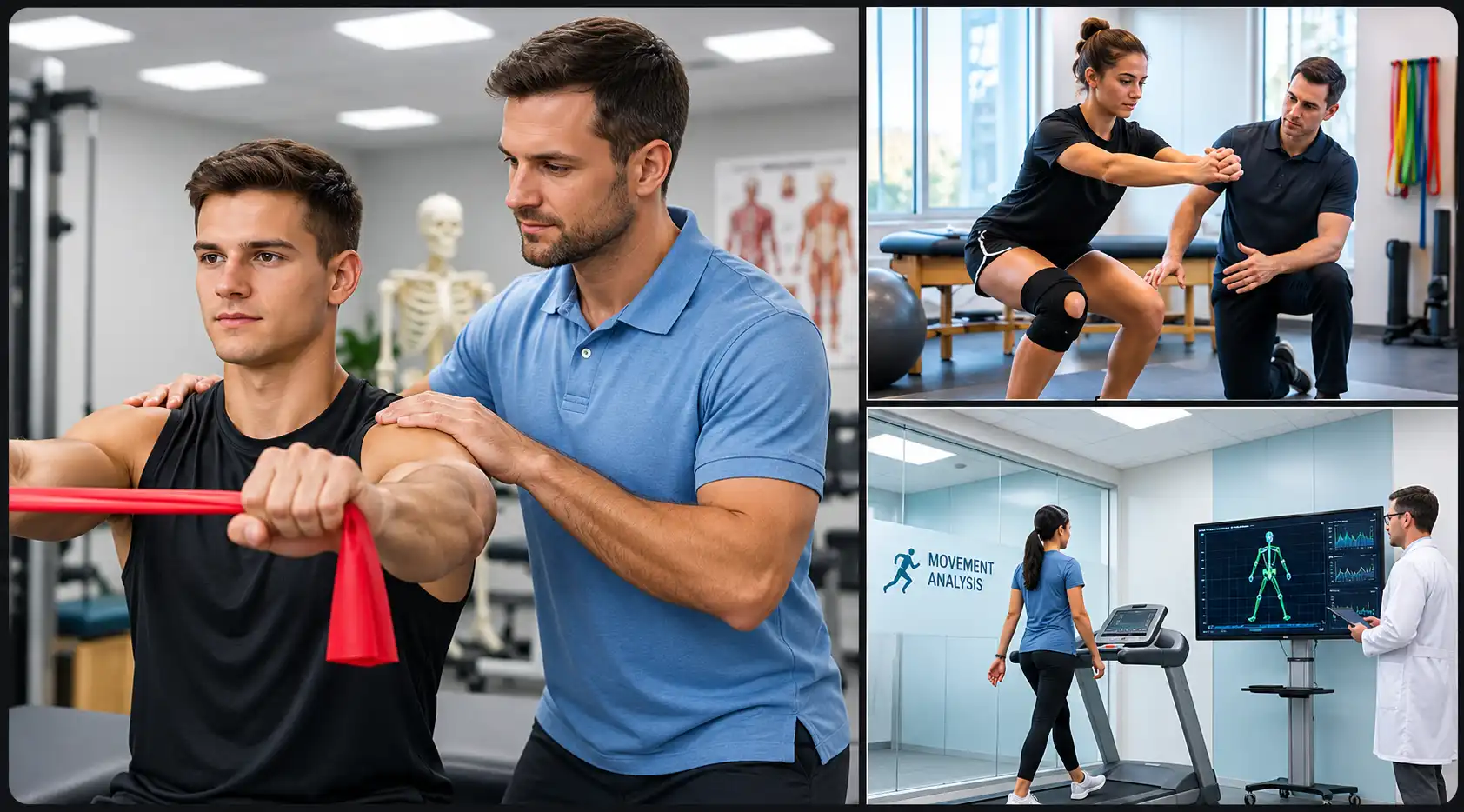
Kinesiology provides a scientific foundation for many rehabilitation practices.
Physical therapists and other qualified rehabilitation professionals apply principles of biomechanics, exercise physiology, and motor learning to help individuals recover physical function.
Depending on the condition, rehabilitation may involve therapeutic exercise, mobility training, progressive resistance, balance exercises, movement retraining, manual therapy, and neuromuscular electrical stimulation.
Sports massage may also be used as a complementary approach to managing muscular discomfort.
However, kinesiology itself is not a medical treatment. A degree in kinesiology does not automatically qualify someone to diagnose diseases, prescribe medication, or independently provide medical rehabilitation. Professional responsibilities depend on qualifications, licensing, and local regulations.
Kinesiology vs. Applied Kinesiology
One important distinction is the difference between scientific kinesiology and applied kinesiology.
Although the names sound similar, they are not interchangeable.
| Scientific kinesiology | Applied kinesiology |
|---|---|
| Scientific study of human movement | Alternative diagnostic approach |
| Based on anatomy, physiology, and biomechanics | Often uses manual muscle testing |
| Used in exercise science and sports research | Sometimes used in complementary healthcare |
| Measures physical performance and movement | May claim to identify internal health disorders |
| Supported by established scientific disciplines | Many diagnostic claims lack reliable scientific evidence |
Standard clinical muscle testing can be useful for assessing muscular strength and function. However, using muscle responses to diagnose allergies, nutritional deficiencies, organ dysfunction, or unrelated diseases is not supported by sufficient scientific evidence.
Symptoms such as difficulty breathing, dizziness, excessive sweating, and difficulty urinating require appropriate medical evaluation rather than kinesiology-based diagnosis.
Modern Technology Used in Kinesiology
Advances in technology have made human movement easier to measure and analyze.
Electromyography (EMG)
Measures electrical activity associated with muscle activation.
3D motion capture
Analyzes joint angles, movement patterns, and body positioning.
Force plates
Measure ground reaction forces, balance, and aspects of athletic performance.
Isokinetic dynamometry
Measures muscular torque and performance at controlled movement speeds.
Wearable fitness technology
Tracks physical activity, heart rate, movement, and selected training metrics.
AI-powered movement analysis
Uses computer vision to estimate body positioning, joint angles, and movement patterns.
AI-assisted movement analysis is becoming more accessible through smartphones and fitness applications. However, its accuracy varies depending on the software, camera positioning, exercise, and individual characteristics.
Kinesiology for Adults Over 40 and 50
As people age, maintaining muscle mass, strength, balance, mobility, and physical independence becomes increasingly important.
Age-related changes may include reduced muscle mass, lower muscular power, changes in joint mobility, slower recovery, and reduced balance.
Kinesiology helps exercise professionals develop training programs that accommodate these changes without unnecessarily limiting physical activity.
For older adults, a well-designed exercise program may include:
| Training component | General recommendation |
|---|---|
| Resistance training | At least 2 days per week |
| Cardiovascular exercise | 150–300 minutes of moderate activity weekly, or equivalent |
| Balance training | Regularly, especially for older adults at risk of falls |
| Mobility exercises | According to individual needs |
| Power training | Appropriate to experience and physical ability |
| Recovery | Adjusted to training demands and health status |
These are general physical activity recommendations rather than a personalized bodybuilding prescription.
Older adults can continue building muscle and improving strength through appropriately programmed resistance training. Age alone does not eliminate the body’s ability to adapt to exercise.
Kinesiology vs. Exercise Science vs. Physical Therapy
These disciplines overlap but have different primary objectives.
| Discipline | Primary focus | Common applications |
|---|---|---|
| Kinesiology | Human movement | Sports, fitness, biomechanics |
| Exercise science | Physiological responses to exercise | Conditioning and performance |
| Physical therapy | Clinical rehabilitation | Injury and disability management |
| Sports science | Athletic performance | Competitive sports |
| Biomechanics | Mechanical principles of movement | Technique and equipment analysis |
| Strength and conditioning | Physical performance development | Strength, power, speed and endurance |
Kinesiology often serves as an academic foundation for several of these professions.
Career Opportunities in Kinesiology
A background in kinesiology can lead to a variety of fitness, sports, research, and health-related careers.
Potential career paths include personal training, strength and conditioning coaching, exercise physiology, sports performance analysis, biomechanics research, corporate wellness, fitness education, and athletic development.
Some professions, including physical therapy and clinical exercise physiology, may require additional education, professional certification, or licensing.
If you are interested in entering the fitness industry, read our review of common personal training certifications.
How Bodybuilders Can Apply Kinesiology to Their Workouts
Understanding kinesiology does not require you to become a sports scientist. Even basic knowledge can improve your approach to training.
Practical Kinesiology Training Checklist
Apply the science of human movement to your daily workouts. Use this checklist to develop a more effective and sustainable training program.
Applying these principles consistently can help you develop a more effective and sustainable bodybuilding program.
Frequently Asked Questions About Kinesiology
What is kinesiology in simple terms?
Kinesiology is the scientific study of how the human body moves. It examines the relationship between muscles, joints, bones, the nervous system, and physical activity.
Is kinesiology useful for bodybuilding?
Yes. Kinesiology helps bodybuilders understand muscle function, exercise mechanics, resistance, movement efficiency, and the principles behind strength development and muscle growth.
Can kinesiology help build muscle?
Kinesiology provides scientific principles that can help improve exercise selection and resistance training programs. Muscle growth itself depends on factors such as training stimulus, nutrition, recovery, and individual physiology.
Is kinesiology the same as physical therapy?
No. Kinesiology is a scientific and academic discipline, while physical therapy is a healthcare profession focused on assessing and treating movement-related conditions.
Can kinesiology diagnose diseases?
Kinesiology alone cannot reliably diagnose diseases. Medical diagnosis requires appropriate clinical evaluation by qualified healthcare professionals.
Is kinesiology good for older adults?
Yes. Kinesiology principles can support exercise programs designed to improve strength, mobility, balance, coordination, and physical independence among older adults.
Does kinesiology tape improve muscle growth?
There is no convincing evidence that kinesiology tape directly increases muscle hypertrophy. It may provide temporary symptom relief or sensory feedback in certain circumstances, but it is not a replacement for resistance training or rehabilitation.
Do personal trainers need to study kinesiology?
A basic understanding of kinesiology is valuable for personal trainers because it helps them design exercise programs, explain movement mechanics, and modify exercises according to individual needs.
Conclusion
Kinesiology is one of the scientific foundations of modern fitness, bodybuilding, sports performance, and physical rehabilitation.
By understanding how muscles, joints, bones, and the nervous system work together, individuals can make better decisions about exercise selection, training intensity, movement technique, and recovery.
For bodybuilders, the practical value of kinesiology lies in understanding why exercises work rather than simply following routines.
Whether your goal is to build muscle, increase strength, improve athletic performance, or maintain physical independence as you age, applying the principles of kinesiology can help you train with greater purpose.
Recommended scientific resources
- PubMed – Exercise and Movement Science Research
- American Kinesiology Association
- American College of Sports Medicine
- National Strength and Conditioning Association
- International Society of Biomechanics
- World Health Organization – Physical Activity