
Last Updated on November 26, 2026
You want to gain size, but your budget says otherwise. Good news: you don’t need imported whey, salmon, or a fancy meal-prep service to bulk. The Filipino market and the neighborhood sari-sari store already stock some of the best budget bulking foods around.
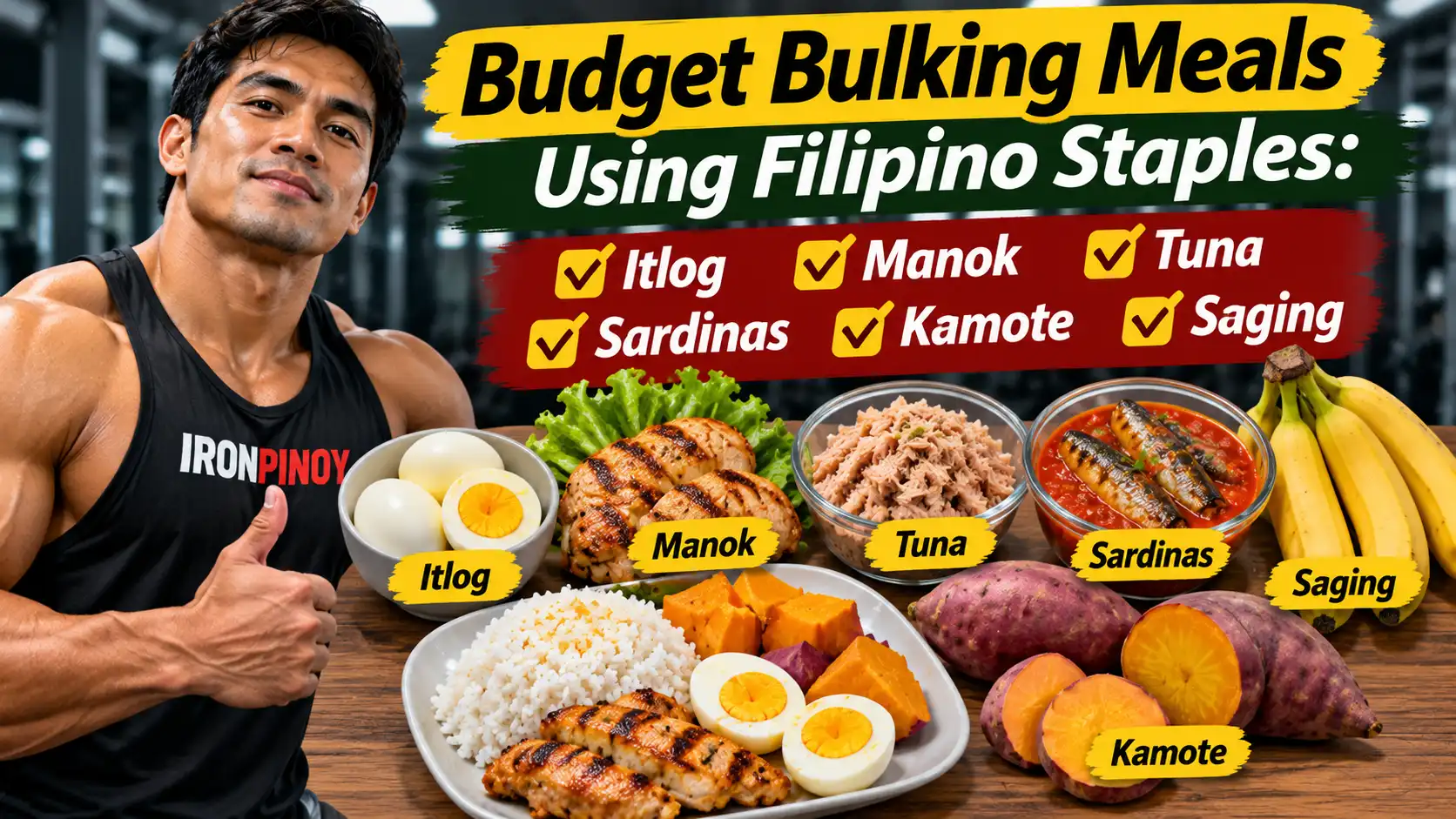
This guide shows you how to build budget bulking meals in the Philippines around six staples: itlog, manok, tuna, sardinas, kamote, and saging. You’ll get meal ideas, rough macros, a sample day, a weekly shopping approach, and tips for stretching every peso.
How bulking works (quick version)
To build muscle, you need three things:
- A calorie surplus. Eat a bit more than you burn. A modest surplus (roughly 250 to 500 calories above maintenance) is enough for most lifters and keeps fat gain in check.
- Enough protein. A common target for people who train is about 1.6 to 2.2 grams of protein per kilo of bodyweight per day.
- Progressive training. Food only builds muscle if you give your body a reason to grow. Lift consistently and add weight or reps over time.
The six foods below cover protein, carbs, and healthy fats at a low cost, and you can find all of them in any palengke or supermarket.
Why these six Filipino staples work
Nutrition numbers below are approximate and vary by brand, size, and cooking method. Always check the label on canned goods.
| Staple | What it gives you | Approx. per serving |
|---|---|---|
| Itlog (egg) | Complete protein, healthy fats, vitamins | ~6 g protein, ~70 kcal per large egg |
| Manok (chicken) | Lean protein; thigh and leg quarters are cheaper than breast | ~25 to 31 g protein per 100 g cooked |
| Tuna (canned) | Convenient, high-protein, low-fat when in water | ~20 to 30 g protein per can |
| Sardinas (sardines) | Protein plus omega-3 fats, calcium if you eat the soft bones | ~15 to 25 g protein per can |
| Kamote (sweet potato) | Slow-digesting carbs, fiber, vitamin A | ~20 g carbs, ~86 kcal per 100 g |
| Saging (banana, e.g. saba) | Quick carbs and potassium, easy extra calories | ~25 g carbs, ~100 kcal per piece |
Add rice (bigas) as your calorie base and a few cheap vegetables like kangkong, pechay, or sitaw, and you have a complete bulking pantry.
10 budget bulking meals with Filipino staples
1. Itlog na pula with garlic rice and kamote
Scramble or fry 3 to 4 eggs, serve with sinangag (garlic rice) and a few slices of boiled kamote. It’s a classic, filling breakfast that’s heavy on both protein and carbs.
2. Tuna omelet with rice
Mix a drained can of tuna with 3 eggs, chopped onion, and a little tomato. Cook as an omelet and pair with a cup or two of rice. This is roughly 35 to 45 grams of protein in one cheap plate.
3. Adobong manok (thigh or leg quarter) with rice
Chicken thighs are usually cheaper than breast and have more calories, which helps on a bulk. Cook a big batch of adobo, then portion it for the week. Adobo actually tastes better the next day.
4. Tinolang manok with kamote
A lighter option when you want something warm. Use chicken pieces, sayote or papaya, and chili leaves. Add boiled kamote on the side for extra carbs.
5. Ginisang sardinas with itlog
Sauté canned sardines in tomato sauce with garlic and onion, then crack in an egg or two. Serve over rice. It’s one of the cheapest high-protein meals you can make, and it’s ready in about 10 minutes.
6. Tuna sisig-style rice bowl
Sauté drained tuna with onion, chili, and a splash of calamansi and soy sauce. Top with a fried egg over a bowl of rice. It’s savory, quick, and perfect for meal prep.
7. Sardines and kamote tops (talbos ng kamote) salad
Blanch talbos ng kamote, then toss with tomato, onion, and sardines. The leaves are cheap and nutritious, and the sardines make this a surprisingly complete meal.
8. Baked or air-fried kamote fries with egg
Slice kamote into wedges, roast until crisp, and serve with scrambled or hard-boiled eggs. Good as a pre-workout meal when you want slow carbs.
9. Banana (saging) peanut shake
Blend 2 saging, milk (fresh, evap, or powdered), a spoonful of peanut butter, and an egg if you’re comfortable with that, or add oats. It’s an easy way to add 400 to 600 calories when you struggle to eat enough solid food.
Food safety tip: if you use raw egg in a shake, use fresh, clean, uncracked eggs, or skip it. Cooked eggs are the safer choice.
10. Turon-inspired post-workout snack
Wrap sliced saging in lumpia wrapper with a little brown sugar and pan-fry or air-fry. It’s a Filipino-friendly way to add fast carbs after training.
Sample bulking day on a budget
This is a template, not a prescription. Adjust portions to your bodyweight, goals, and appetite.
- Breakfast: 3 to 4 eggs, 1.5 cups garlic rice, 1 piece saging
- Snack: Banana peanut shake
- Lunch: Adobong manok (thigh) with 2 cups rice and a vegetable side
- Pre-workout: Boiled kamote with a piece of saging
- Dinner: Ginisang sardinas with itlog and rice
- Optional late snack: Tuna with crackers or a small bowl of rice
That kind of day can easily reach 2,800 to 3,500 calories and 130 to 170 grams of protein, depending on portions, without any specialty products.
How to stretch your budget even further
- Buy eggs by the tray. Eggs are usually cheaper per piece when you buy 30 at a time. Check the date and store them properly.
- Choose chicken thigh, leg quarters, or whole chicken. Cheaper cuts with the bone in often cost less per gram of protein than breast.
- Stock canned goods when they’re on sale. Tuna and sardines keep for a long time, so promos at the supermarket are worth using.
- Buy kamote and saging at the palengke. Wet markets are usually cheaper than supermarkets, and in-season produce is the best value.
- Cook rice in bulk. Rice is your cheapest source of calories. Cook extra and refrigerate or freeze portions.
- Plan meals for the week. Writing a simple plan stops impulse buying and wasted food.
- Use cheap flavor boosters. Garlic, onion, calamansi, vinegar, soy sauce, and chili make simple food enjoyable so you’ll actually stick with it.
Simple weekly shopping list
Prices vary by area and season, so check your local palengke or supermarket. Here is a flexible starting list for one person:
- 2 trays of eggs (or 1 tray if you eat fewer)
- 2 to 3 kg chicken (thigh, leg quarters, or whole)
- 6 to 8 cans of tuna and sardines, mixed
- 2 to 3 kg kamote
- 2 to 3 hands of saging
- Rice for the week
- Vegetables: kangkong, pechay, sitaw, sayote, talbos ng kamote
- Garlic, onion, tomato, cooking oil, soy sauce, vinegar
Common mistakes on a budget bulk
- Skipping vegetables. Fiber and micronutrients matter. Cheap greens help digestion and overall health.
- Relying only on canned fish. Canned goods can be high in sodium. Mix them with fresh protein like eggs and chicken, and vary your sources.
- Eating too fast, too dirty. A “dirty bulk” with lots of processed food can add fat quickly. Stick to whole foods most of the time.
- Not tracking progress. Weigh yourself once or twice a week. A gain of roughly 0.25 to 0.5 kg per week is a reasonable target for most beginners and intermediates.
- Forgetting to train hard. Food supports growth, but lifting drives it.
Frequently asked questions
Can I really bulk with just itlog, manok, tuna, sardinas, kamote, and saging?
Yes. Combined with rice and some vegetables, these foods cover your protein, carbs, and fats. Variety matters over time, so rotate meals and add other cheap foods like monggo, tofu, and seasonal vegetables.
How many eggs can I eat in a day?
Many healthy people eat several eggs a day without problems, but individual needs differ. If you have a medical condition or high cholesterol, ask your doctor or a registered dietitian what’s right for you.
Is canned tuna or sardines safe to eat every day?
In moderation, both are generally fine. Because of mercury in some fish and sodium in canned products, it’s wise to vary your protein sources rather than relying on one can every single day.
Is kamote better than white rice?
Not necessarily “better”; they do different jobs. Kamote offers more fiber and vitamins, while rice is cheap and calorie-dense. Using both is a great strategy.
How much does a budget bulking diet cost in the Philippines?
It depends on your location, portions, and where you shop. Buying in bulk, shopping at the palengke, and cooking at home will cost much less than eating out or buying supplements. Track your own weekly spend and adjust.
Final thoughts
Bulking on a budget in the Philippines is easier than most people think. Eggs, chicken, tuna, sardines, kamote, and saging give you affordable protein and carbs, and Filipino cooking makes them taste great. Plan your meals, shop smart, eat consistently, and train hard.
Start with one or two of the meals above this week, see how your body responds, and build from there.
Disclaimer: This article is for general information and isn’t medical or nutritional advice. If you have a health condition, allergies, or specific dietary needs, consult a doctor or registered dietitian before changing your diet.