
Last Updated on November 20, 2026
In 2002, Philippine bodybuilding was fighting for greater recognition. While basketball, boxing, and other traditional sports dominated national attention, a growing community of Filipino bodybuilders was working to establish its place in the sporting world.
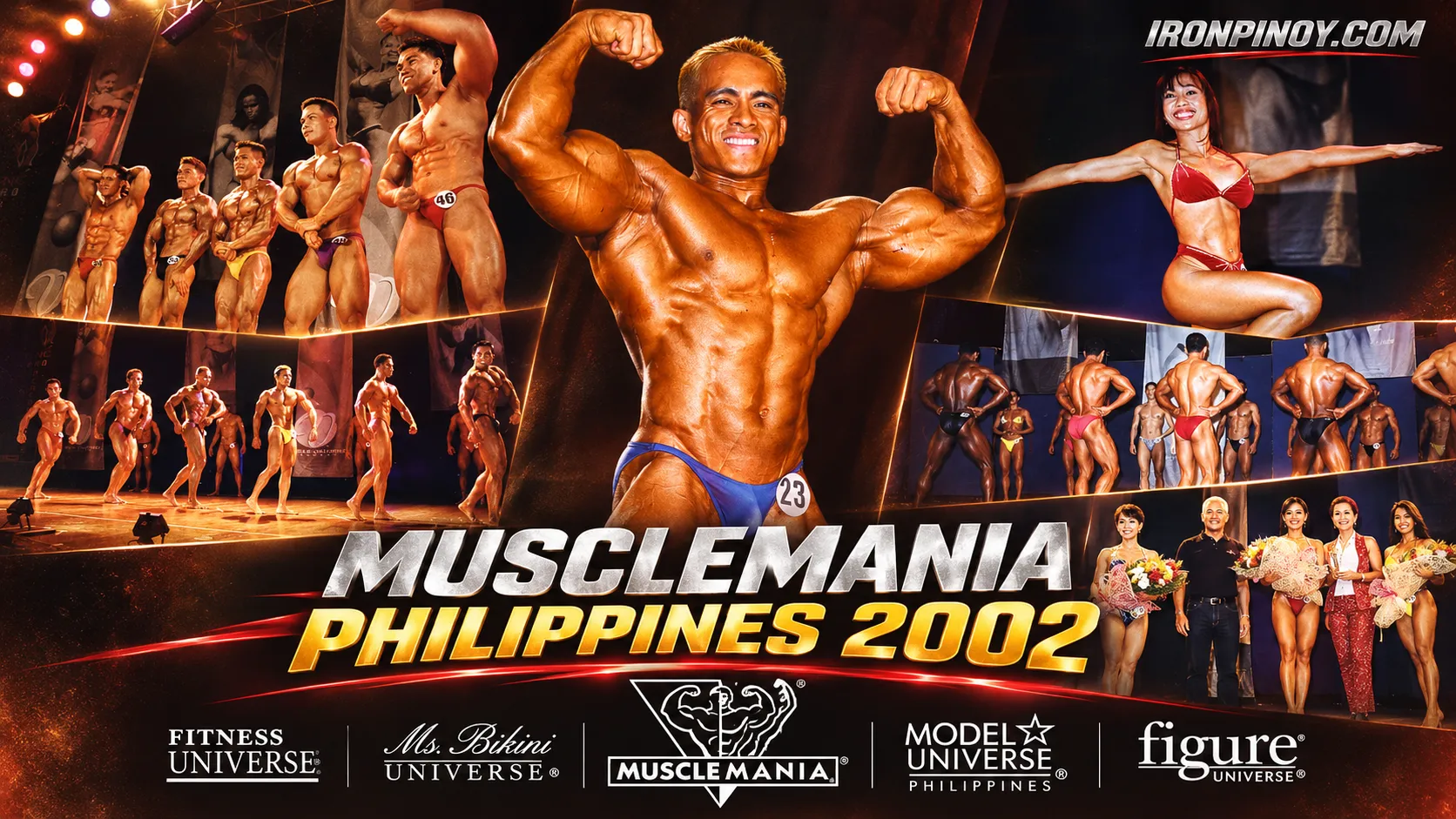
One event helped bring that community into the television spotlight: IronPinoy.com Musclemania Philippines 2002 and Miss Bikini Philippines 2002.
Featured in a special segment of the television program Game Plan, the competition highlighted the dedication of Filipino physique athletes, the emergence of women’s fitness competitions, and the effort to bring international-standard bodybuilding events to the Philippines.
More than two decades later, the footage offers a fascinating look at a period when the country’s bodybuilding community was building its identity, attracting new participants, and working toward international recognition.
When Philippine Bodybuilding Entered the Spotlight
At the beginning of the 2000s, bodybuilding in the Philippines was already supported by dedicated athletes, gym owners, organizers, and enthusiasts. However, mainstream television coverage remained limited.
For many Filipinos, bodybuilding was still associated primarily with muscular men lifting weights and posing onstage.
The Game Plan feature challenged that perception by asking a simple question: Is bodybuilding really a sport?
The program went behind the scenes at IronPinoy.com Musclemania Philippines 2002, showing competitors preparing backstage, posing before judges, and demonstrating the results of months or years of training.
What emerged was a picture of bodybuilding as a demanding competitive activity requiring strength training, disciplined nutrition, preparation, and stage presentation.
The report also highlighted the increasing participation of women in the fitness industry, reflecting changes in how Filipinos viewed exercise, physical development, and athletic achievement.
IronPinoy.com’s Role in Promoting Philippine Bodybuilding
During the early 2000s, bodybuilding competitions faced challenges beyond the athletes’ physical preparation.
Organizers needed sponsors, appropriate venues, qualified judges, media coverage, and public support. The sport also faced disagreements within the wider bodybuilding community.
Against this backdrop, IronPinoy.com worked to promote bodybuilding and fitness by helping bring organized competitions and international bodybuilding formats to Filipino audiences.
The 2002 Musclemania Philippines event reflected that commitment.
As discussed in the television feature, the objective was not simply to stage another competition. It was to improve the visibility of Filipino athletes and introduce more people to the growing fitness industry.
The organizers wanted bodybuilding to be seen as a legitimate athletic pursuit rather than a contest based only on physical appearance.
The event also sought to give competitors a professional presentation, helping them experience the atmosphere associated with international bodybuilding competitions.
For IronPinoy, this was part of a broader effort to document and promote Philippine bodybuilding at a time when online coverage of local competitions was still developing.
Natural Bodybuilding and the Importance of Discipline
One of the strongest messages in the Game Plan documentary was the emphasis on natural bodybuilding.
The feature presented Musclemania Philippines as a competition promoting drug-free participation, with random drug testing discussed as part of the event’s approach.
Natural bodybuilding emphasizes muscle development through resistance training, nutrition, recovery, and adherence to the competition’s prohibited-substance rules.
The documentary also highlighted the demanding preparation that takes place before an athlete steps onto the stage.
The Training Behind a Competition Physique
Competitive bodybuilders typically spend months preparing for a contest. Their training involves more than building large muscles.
Competitors must develop balanced physiques while improving muscular definition and preserving as much muscle mass as possible during contest preparation.
Common elements of bodybuilding preparation include:
- Resistance training: Developing muscle size, strength, and proportion through structured workouts.
- Nutrition management: Adjusting calorie intake and macronutrients according to training and competition goals.
- Recovery: Managing fatigue, sleep, and training stress.
- Posing practice: Learning to display muscular development effectively during judging.
- Consistency: Following a demanding routine over an extended period.
The documentary placed particular emphasis on dieting, which competitors described as one of the most difficult aspects of preparing for the stage.
While training builds the physique, contest preparation aims to reveal muscular definition without sacrificing excessive amounts of muscle.
The program mentioned extremely low body-fat percentages among competitors. These figures should be understood as claims made in the historical broadcast, not as recommended targets. Extremely low body-fat levels can pose significant health risks and are not necessary for general fitness or long-term health.
Creatine and Sports Nutrition
The feature also mentioned creatine, a naturally occurring compound that helps support rapid energy production during intense muscular effort.
Today, creatine monohydrate is among the most extensively researched sports supplements. It can support strength and performance during resistance training when combined with an appropriate training program.
However, supplements cannot replace consistent training, adequate nutrition, and recovery.
For both competitive bodybuilders and recreational lifters, long-term progress depends primarily on sustainable habits.
Musclemania Philippines: Bringing an International Competition Format to Filipino Athletes
Musclemania began as an American bodybuilding production associated with televised physique competitions.
Its presentation emphasized both athletic development and entertainment, giving competitors an opportunity to showcase their physiques in a professionally produced environment.
Over time, the Musclemania competition format expanded internationally.
By 2002, the Philippines was participating in that international bodybuilding scene.
The Game Plan documentary described the Philippine event as part of Musclemania’s expanding international presence and highlighted the organizers’ effort to treat competitors as more than simply contestants.
The goal was to make athletes feel like the stars of the event.
This approach helped distinguish Musclemania’s presentation from smaller bodybuilding contests that typically received little media exposure.
For Filipino competitors, participating in an internationally recognized competition format offered another avenue to develop their competitive experience and visibility.
Photos of Musclemania Philippines 2002
Miss Bikini Philippines 2002: Expanding Opportunities for Women in Fitness
Another important part of the 2002 event was Miss Bikini Philippines, presented alongside the Musclemania competition.
At the time, bodybuilding was often perceived as a male-dominated activity, and women’s participation in physique-related events received less mainstream attention.
The introduction of Miss Bikini Philippines provided an alternative competitive platform emphasizing fitness, appearance, presentation, and stage confidence.
According to the documentary, organizers wanted to encourage women to participate in fitness competitions without requiring the extreme muscular development associated with some traditional bodybuilding categories.
The event featured women representing different age groups, including contestants in their 20s, 30s, and 40s.
Their participation challenged the idea that fitness competitions were only for younger women.
Photos of Musclemania Bikini Philippines 2002
What Did Judges Look For?
The television feature described Miss Bikini as a competition focusing on physical balance, symmetry, and presentation.
Contestants appeared onstage and participated in fitness-related interviews.
Unlike the men’s bodybuilding divisions, which emphasized muscular development and mandatory poses, the women’s event placed greater attention on overall appearance and stage presentation.
The format reflected the standards and attitudes of that particular period.
Women’s physique sports have since evolved, offering a wider range of competitive categories and opportunities for female athletes.
The historical importance of Miss Bikini Philippines 2002 lies in its role in bringing more women into the competitive fitness spotlight.
How Bodybuilding Competitions Were Judged
The Game Plan feature gave viewers a closer look at how athletes were evaluated during Musclemania Philippines 2002.
Bodybuilding judging is not simply about identifying the competitor with the largest muscles.
Judges assess how well an athlete combines muscular size, proportion, conditioning, and presentation.
1. Mandatory Poses
During the initial judging rounds, contestants performed compulsory poses that allowed judges to compare different muscle groups.
The television coverage showed competitors executing poses such as the front double biceps and rear lat spread.
These poses reveal different aspects of muscular development, including shoulder width, arm size, back development, and overall proportion.
2. Muscular Symmetry and Proportion
Symmetry refers to the balance of the physique.
Judges examine whether the upper and lower body are proportionate and whether different muscle groups are developed harmoniously.
A competitor with excellent overall balance may outperform someone with greater muscle mass but weaker proportions.
3. Muscular Conditioning
Conditioning refers to the visible definition and presentation of muscle.
Competitors aim to show clear muscular separation while retaining fullness and size.
Achieving this appearance requires careful preparation and involves a demanding balance between training, nutrition, and recovery.
4. Individual Posing Routines
The documentary showed finalists performing approximately one-minute posing routines.
These performances allowed athletes to present their strongest features and demonstrate their confidence onstage.
Posing involves coordination, muscular control, and practice.
Successful routines combine technical execution with the ability to maintain the audience’s and judges’ attention.
5. Stage Presence and Charisma
The competition also emphasized the importance of presentation.
A successful bodybuilder needs to display the physique effectively, maintain composure under pressure, and connect with the audience.
The documentary made it clear that the ideal Musclemania champion needed more than muscular size alone.
Size, symmetry, conditioning, and charisma all contributed to the complete competitive physique.
Musclemania Philippines 2002: Recorded Division Winners
Historical competition records identify several athletes who won their respective divisions in Musclemania Philippines 2002.
| Division | Recorded Winner |
|---|---|
| Men’s Junior | Jon Salamat |
| Men’s Medium | Pablo Navarro |
| Men’s Short | Michael Burinaga |
| Men’s Tall | Jay Carillo |
These names appear in the historical results recorded by the Fitness Volt bodybuilding competition database.
They represent athletes who competed during an important period in the development of the Philippine bodybuilding scene.
Could Filipino Bodybuilders Compete Internationally?
Toward the end of the documentary, Game Plan returned to one of its central questions: Could Filipino bodybuilders compete on the world stage?
The report highlighted a prominent Filipino bodybuilder who had previously won a Musclemania title and appeared as a guest poser.
His appearance demonstrated the level of muscular development that local athletes could achieve through dedicated training.
Although Philippine bodybuilding faced limitations in funding, sponsorship, facilities, and exposure, the documentary presented Filipino competitors as athletes capable of pursuing international opportunities.
The broader message was that competitive success required sustained commitment and opportunities to compete.
International exposure could help Filipino athletes gain experience, understand different judging standards, and measure themselves against competitors from other countries.
The 2002 event was one example of how organizers were trying to create those opportunities.
Why the 2002 Musclemania Philippines Event Still Matters
Looking back, the importance of IronPinoy.com Musclemania Philippines 2002 extends beyond its contest results.
The event represents a chapter in the growth of Philippine bodybuilding when organizers, competitors, and fitness supporters were working to increase the sport’s visibility.
Several aspects of the competition remain significant.
It helped bring bodybuilding to mainstream television. The Game Plan coverage introduced audiences to the training and preparation behind competitive physique development.
It promoted natural bodybuilding. The event publicly emphasized drug-free competition and the importance of disciplined preparation.
It highlighted female participation in fitness. Miss Bikini Philippines expanded the event’s focus and presented women as active participants in the growing fitness community.
It connected Filipino competitors with an international format. Musclemania Philippines gave local bodybuilders another competitive platform associated with events staged in other countries.
It preserved a part of Philippine bodybuilding history. Video footage, photographs, and competition records remain valuable references for understanding the athletes and events that shaped the sport.
Watch: IronPinoy.com Musclemania Philippines 2002 on Game Plan
The historical Game Plan television segment provides a behind-the-scenes look at the competition.
It features athlete interviews, backstage preparation, bodybuilding judging, women’s fitness competition, posing routines, and discussions about the future of Philippine bodybuilding.
Watch the original video:
Video Chapters
| Timestamp | Segment |
|---|---|
| 00:08 | The rising Philippine fitness scene |
| 01:30 | Bodybuilding as a sport: Discipline and athleticism |
| 03:12 | Musclemania Philippines and Miss Bikini |
| 04:51 | Competition format and women’s fitness |
| 06:05 | Finalists, posing routines, and judging |
| 07:36 | Champions and international ambitions |
The segment is particularly valuable for longtime bodybuilding enthusiasts who remember the Philippine fitness scene of the early 2000s.
It also gives younger athletes an opportunity to understand how competitions were organized and promoted before social media became central to the fitness industry.
Preserving the History of Philippine Bodybuilding
Much of the early history of Philippine bodybuilding exists in photographs, competition programs, archived results, and video recordings.
Unlike today’s athletes, who can document their training and competitions through social media, earlier generations often relied on dedicated photographers, website publishers, event organizers, and television productions to preserve their achievements.
IronPinoy.com has maintained historical bodybuilding content covering competitions, athletes, and events across different periods.
Related archives include:
- Ironnman and Ironnmaiden 2002 Official Results
- Mr. and Ms. Philippines 2002 Results
- Musclemania Philippines 2003 Prejudging Gallery
- IronPinoy Bodybuilding and Fitness Galleries
These records help keep the achievements of Filipino physique athletes accessible to future generations.
Final Thoughts: A Defining Moment in Philippine Bodybuilding
IronPinoy.com Musclemania Philippines 2002 captured the ambition of a growing bodybuilding community.
The event brought together competitors, organizers, fitness enthusiasts, and media representatives who shared an interest in developing the sport.
It emphasized the discipline behind competitive bodybuilding, gave women another platform in fitness, and helped introduce local athletes to an international competition format.
More than 24 years later, the Game Plan footage remains a valuable historical record.
For today’s Filipino bodybuilders, coaches, and fitness enthusiasts, it offers a reminder that the sport’s growth has been built on decades of training, competition, and community effort.
The physiques onstage were the result of individual dedication. The event itself reflected a wider effort to build Philippine bodybuilding into a recognized competitive sport.
That is the legacy worth remembering.
Historical note: This retrospective is based on the supplied transcript of the original Game Plan feature and supplementary historical competition records. Some dialogue and athlete names in the transcript are unclear, so unverified identifications have been omitted.